AC and duct mold in Dayton usually appears on the evaporator coil, in a pan that won't drain, on attic ducts that sweat and around ceiling registers. Getting rid of it means fixing what keeps the system wet, then cleaning or replacing contaminated parts under a Texas protocol. Call the number on this page to be connected with a local mold remediation company in Dayton.
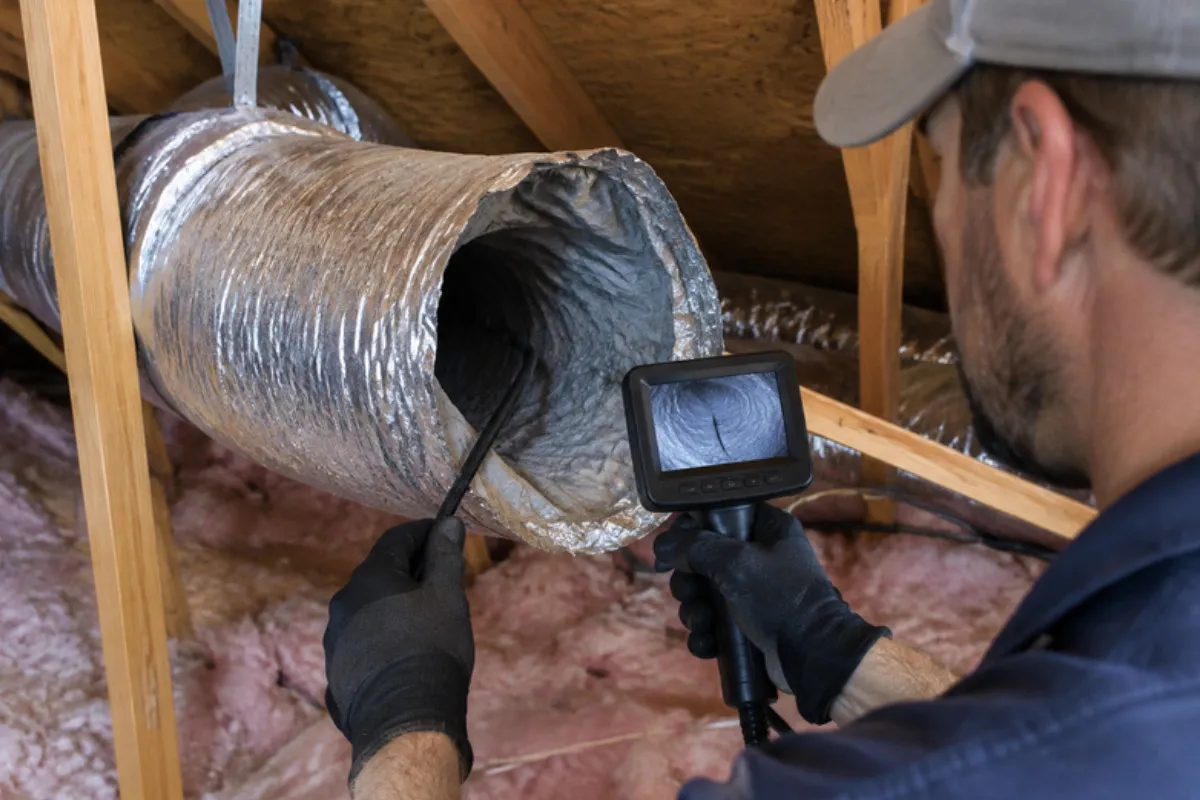
Signs to look for
- Black or gray dots on vent covers and nearby ceiling paint
- An odor like damp cardboard when the blower comes on
- A water stain spreading under the attic air handler
- Standing water or slime in the drain pan
- Rooms where the air feels heavy and sticky despite cooling
Dayton conditions
Dayton is a Liberty County city on US 90, about 38 miles from Houston, founded as West Liberty roughly three miles west of the Trinity River, with a BNSF rail yard just south of town. During Harvey, Lake Livingston releases into the Trinity matched the 1994 record, and more than 7,000 homes across Liberty County were affected, about 800 with major damage or destruction. If a Dayton home took water then, floor-level returns, low duct boots and the indoor unit are worth a close look. For most homes, though, the cause is ordinary: a cooling season stretching from spring into fall, condensate lines that clog with algae, and attic ducts that drip once their insulation tears. Heavy Gulf rain and slow-draining clay soils keep humidity high around the house, which the AC then has to pull out.
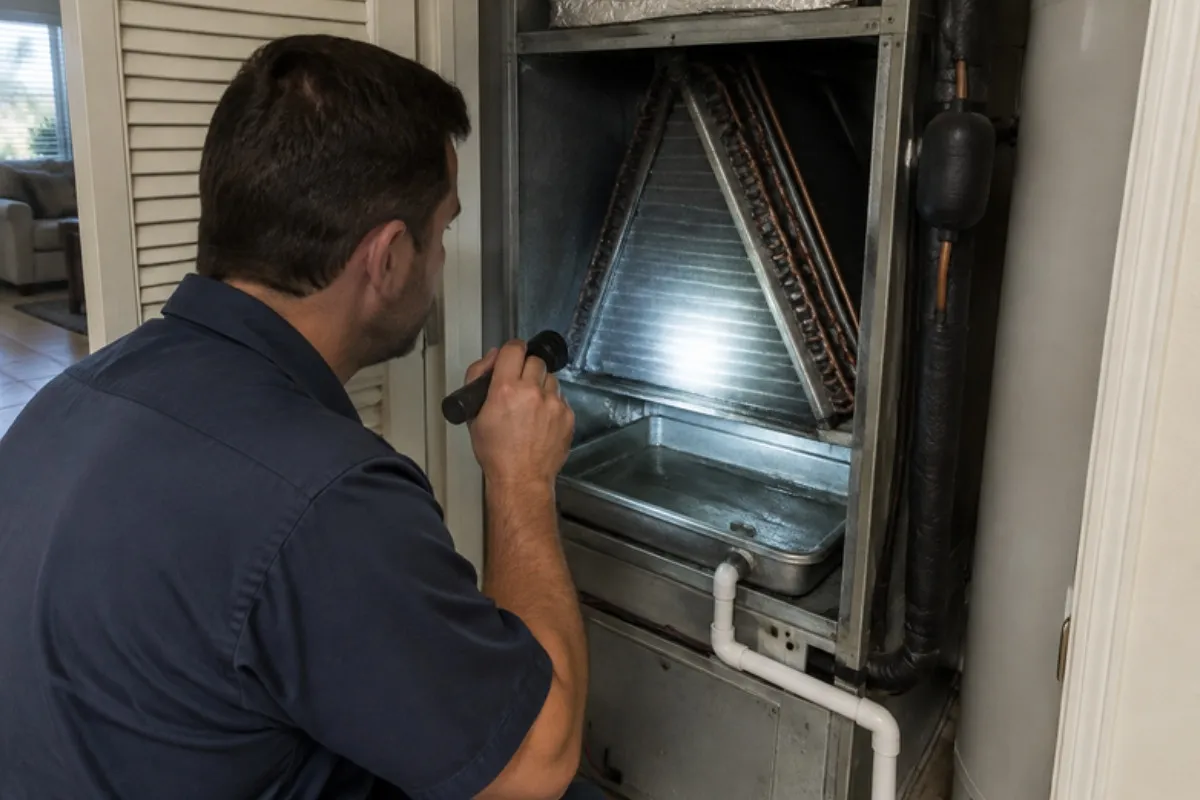
What affects the cost
National ranges (HomeGuide, 2026) put mold work on an HVAC system or ducts at $2,000 to $10,000. What moves a Dayton job within that range: how far growth reaches past the grilles, how much flex duct is replaced, whether flood-damaged equipment must go, and how easily workers can reach the attic. Angi's national figures add about $50 to $75 for an HVAC sample on top of an air test, if the assessor decides one is useful. Texas law also means paying the assessor separately from the remediation company.
What happens when you call
You'll be connected with an independent local company. A mold assessment consultant inspects the system and writes a protocol, and a different company that holds a TDLR mold remediation license carries it out. After the post-remediation assessment passes, you receive a Certificate of Mold Damage Remediation. Replacement equipment or ducts may need a permit from the City of Dayton Building Division in Planning & Development Services, which generally requires inspections for each permit.
AC & Air Duct Mold Removal questions in Dayton
How long will the house be without AC?
How do I keep mold from coming back in the AC?
Are the dark specks around my AC vents mold?
Can I clean moldy vent covers myself in Dayton?
More mold services in Dayton
AC & Air Duct Mold Removal nearby
Helpful guides
Sources
- EPA: Mold Cleanup in Your Home
- EPA: Mold Information Slideshow (testing and sampling)
- TDLR: Mold Assessors and Remediators FAQs
- 16 Tex. Admin. Code 78.150: Photographs; Certificate of Mold Damage Remediation; Duty of Property Owner
- HomeGuide: How Much Does Mold Removal and Remediation Cost? (2026)
- Angi: How Much Does a Mold Inspection Cost?
- News report: Harvey recovery continues in parts of flooded Liberty County (2017)
- City of Dayton: Building Permits and Inspections
- Wikipedia: Dayton, Texas
Last updated: