Mold in a Houston AC system usually grows where cold metal meets humid air: the evaporator coil, the drain pan, sweating ducts and supply registers. Removal means finding the moisture cause, cleaning or replacing the contaminated parts and confirming the result, not just spraying the vents. Call the number on this page to be connected with a local mold remediation company in Houston.
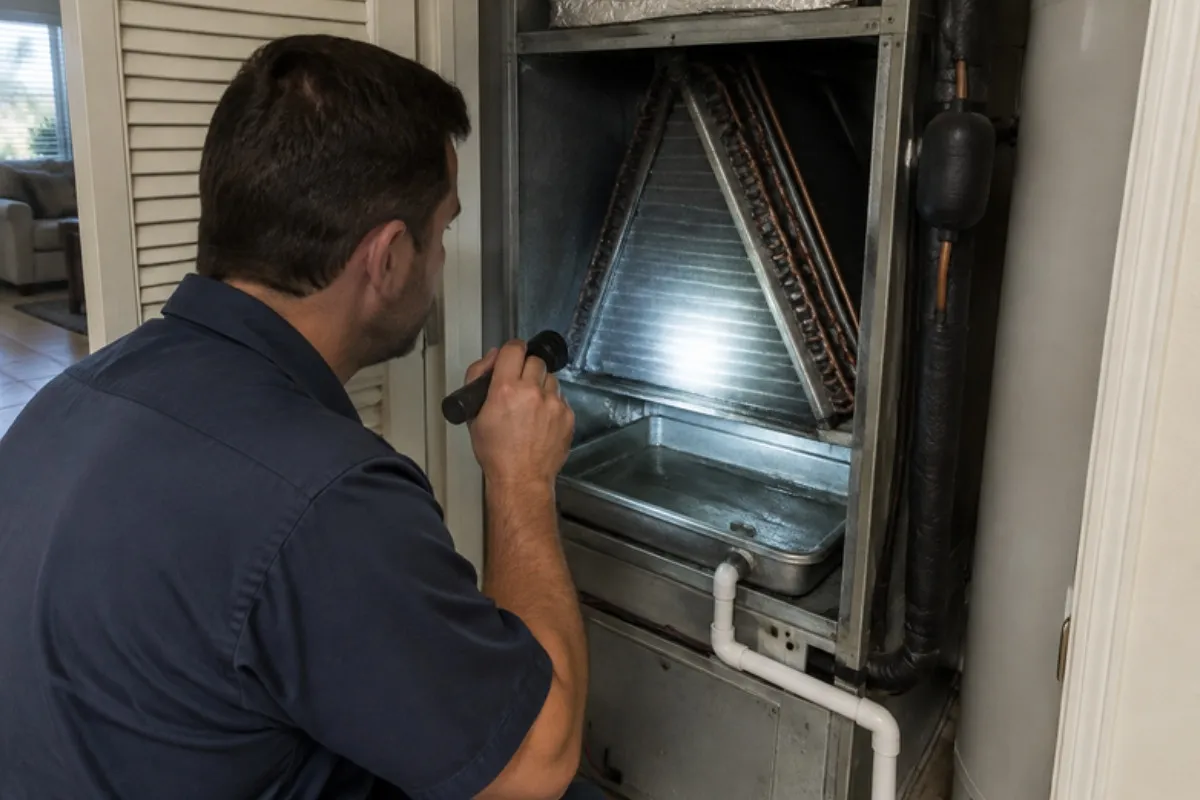
Where AC mold starts in Houston homes
Houston's long, humid cooling season keeps the system wet for months. In many homes the air handler and much of the ductwork sit in a hot attic, where cold ducts pull moisture from the air. Common sources:
- A clogged condensate line or a rusted, standing-water drain pan under the air handler
- Duct runs or boots that sweat because insulation is torn or missing
- Supply registers that drip in summer and grow spots on the grille and nearby ceiling
- An oversized unit that cools fast but removes little moisture, leaving indoor humidity high
- Duct lines or an air handler that took water during a flood
What to do before anyone comes out
If you suspect the system is contaminated, EPA advises not running it, because it can spread mold through the house. In August heat that is hard, so ask about portable cooling while the work is planned. Check the drain line, keep indoor humidity below 60 percent (30 to 50 percent is better), and don't spray household cleaners into ducts.
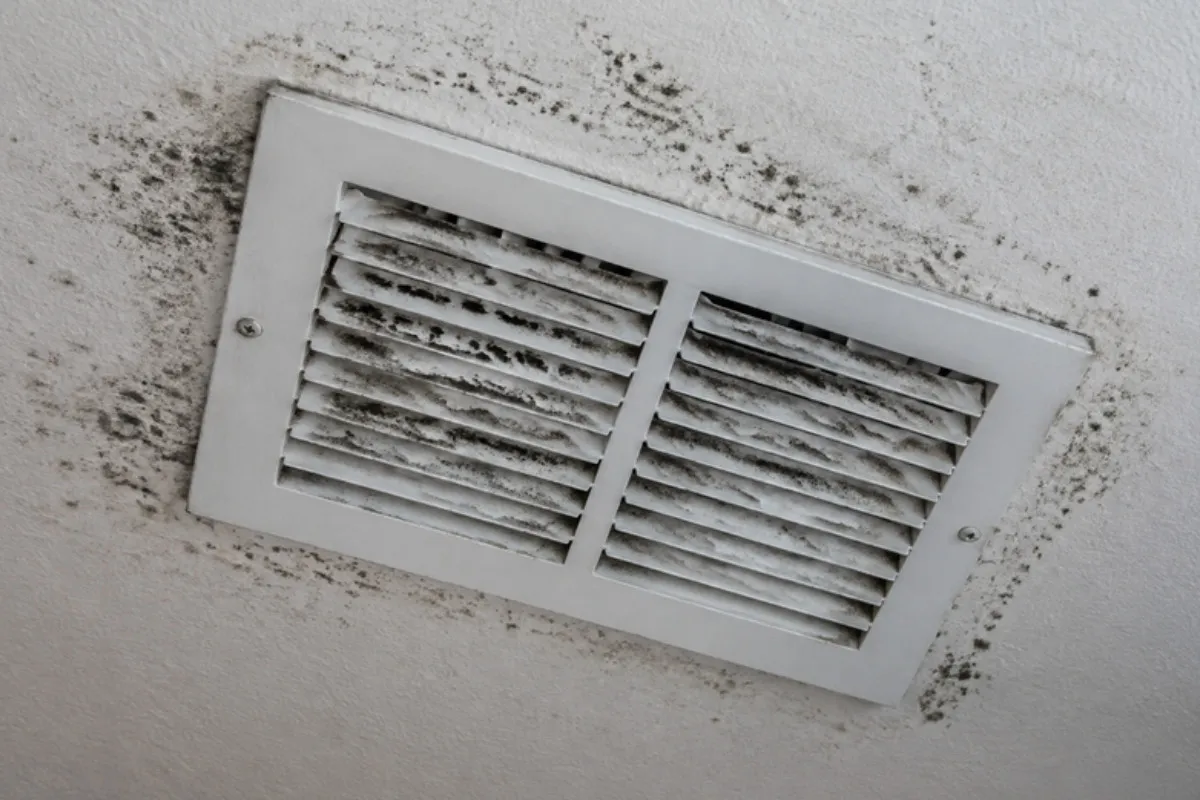
How the work is usually scoped
| Component | Typical approach |
|---|---|
| Supply registers and grilles | Removed and cleaned, or replaced; the ceiling around them checked |
| Coil, blower and drain pan | Cleaned, with the pan and condensate line fixed so water drains |
| Flexible duct with growth inside | Usually replaced, since the liner is hard to clean |
| Sheet-metal trunk lines | Often cleaned in place under containment |
| Duct insulation and sealing | Repaired so the ducts stop sweating |
EPA's guidance on duct cleaning makes a useful point: if the moisture problem is not corrected, mold will come back, however well the ducts were cleaned. Expect the assessor to look at drainage, insulation and humidity, not just the visible spots. An HVAC contractor may need to repair the equipment itself.
Texas rules and two companies
Anyone hired to assess or remove mold needs a TDLR license, and Texas law says the company that assesses cannot also remediate on the same project. The consultant writes a protocol before work, the remediator follows its own work plan, and a post-remediation assessment checks clearance before you receive a Certificate of Mold Damage Remediation. You can check both companies on TDLR's license search.
Cost
National ranges (HomeGuide, 2026) put mold work on an HVAC system or ducts at $2,000 to $10,000; Angi national figures add about $50 to $75 to an air test for an HVAC sample. Duct length, attic access, how much flex duct is replaced and equipment repairs drive the price, plus the assessor's fee.
AC & Air Duct Mold Removal questions from Houston homeowners
Is the black dust on my vents always mold?
Can duct cleaning alone fix AC mold?
Should I keep running my AC?
Who repairs the AC equipment itself?
Related mold services in Houston
Helpful guides
AC & Air Duct Mold Removal in nearby cities and towns
Harris County
Fort Bend County
Montgomery County
Brazoria County
Galveston County
Liberty County
Sources
- EPA: Mold Cleanup in Your Home
- EPA: A Brief Guide to Mold, Moisture and Your Home
- EPA: Should You Have the Air Ducts in Your Home Cleaned?
- TDLR: Mold Assessors and Remediators FAQs
- TDLR: Texas Mold Assessors and Remediators Law
- 16 Tex. Admin. Code 78.150: Certificate of Mold Damage Remediation
- TDLR: License Search
- HomeGuide: Mold Removal and Remediation Cost (2026)
- Angi: How Much Does a Mold Inspection Cost?
Last updated: