In a Houston attic, mold almost always follows one of three moisture sources: the AC air handler and its drain pan, a roof leak from heavy rain, or warm humid air trapped against cool surfaces. Removal means stopping that source first, then taking out wet insulation, cleaning or replacing the affected wood and keeping dust out of the rooms below. Call the number on this page to be connected with a local mold remediation company in Houston.
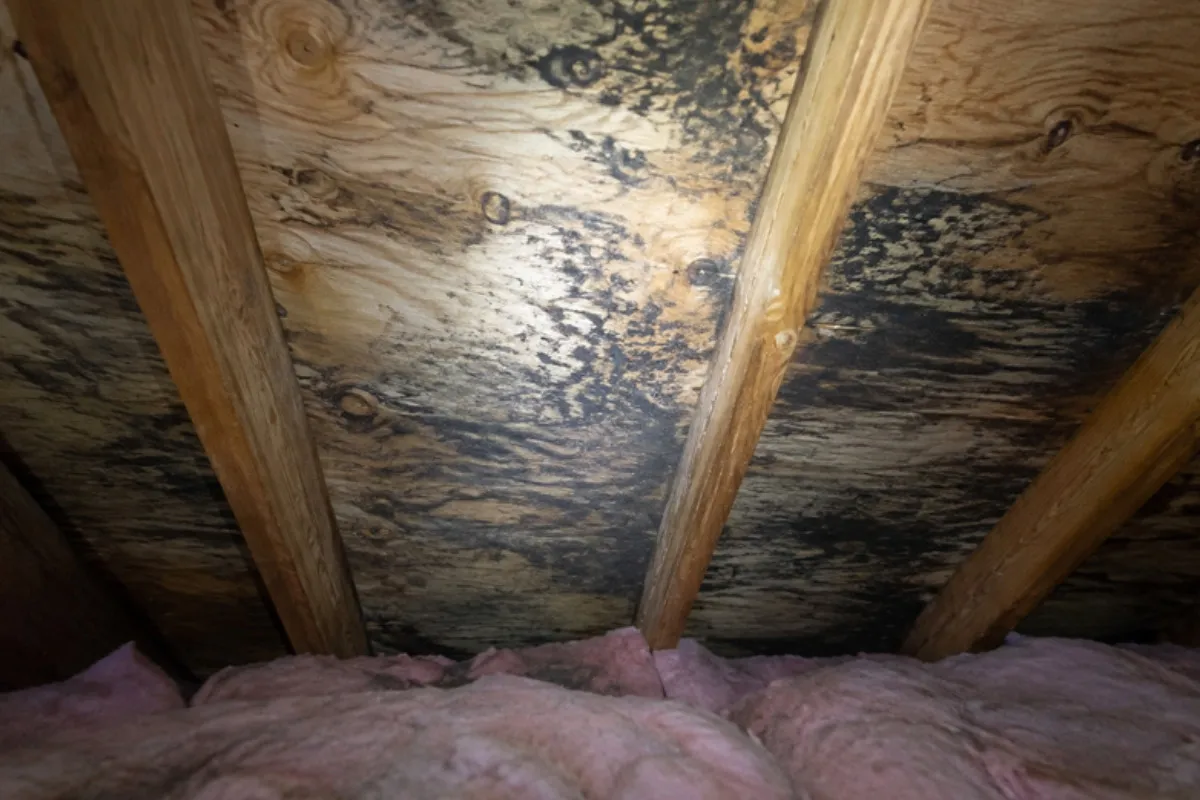
Start with the source, not the stain
Many Houston homes have the air handler and ductwork in the attic, where summer heat and humidity meet the coldest parts of the AC system. The usual culprits:
- Drain pan and condensate line. A clogged line can overflow the pan and soak insulation and ceiling drywall for weeks before a stain shows below. EPA advises keeping drip pans clean and drain lines flowing.
- Sweating ducts and plenums. Torn or thin duct insulation lets cold metal or flex duct drip onto joists.
- Roof leaks. Tropical downpours find gaps at flashing, pipe boots and vents, often on the decking around them.
- Bath fans ending in the attic instead of venting outdoors.
- Blocked soffit vents that trap humid air under the roof.
If the mold is near the air handler or ducts, EPA says not to run an HVAC system you suspect is contaminated, since it can spread spores through the house. Ask the inspector whether to shut the system down until the work is done.
What the inspector should tell you
Expect a mold assessment consultant who holds a TDLR license to identify the moisture source, measure the affected decking and insulation, and say whether ducts or the air handler need attention. That goes into a written protocol covering containment, what is removed, how surfaces are cleaned and the clearance criteria. Texas law requires a separate company, one holding a TDLR mold remediation contractor license, to do the removal on that project.
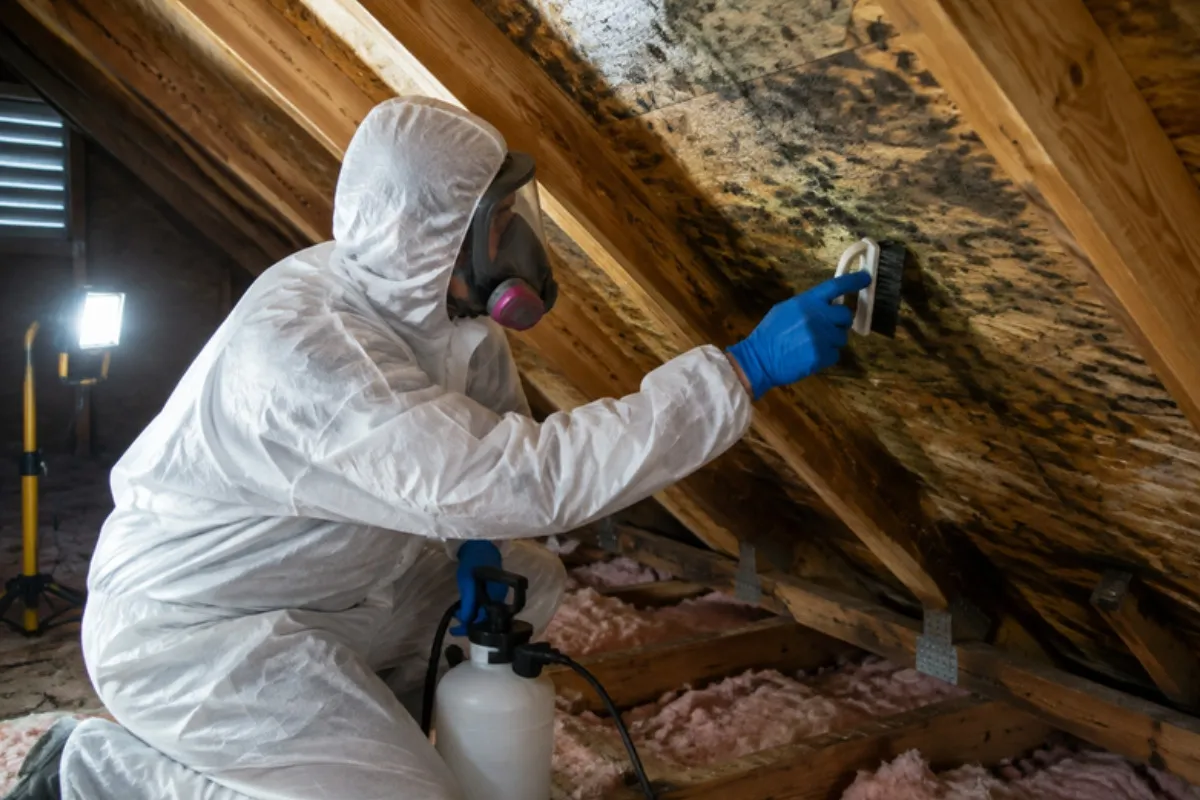
What the removal looks like
- The leak or drain issue is repaired by the right trade, roofer or HVAC technician.
- The attic hatch and ceiling openings are sealed so dust stays out of living space.
- Wet or moldy insulation is bagged and removed.
- Decking and rafters are cleaned, or replaced where the wood is soft or rotted.
- The consultant returns for a post-remediation assessment, and you receive a Certificate of Mold Damage Remediation after a passed clearance.
If roof decking or framing has to be replaced, ask whether a permit is needed and check with the Houston Permitting Center.
Cost range
National ranges (HomeGuide, 2026) put attic mold remediation at $1,500 to $6,000 for part of an attic and $6,000 to $15,000 for a full attic. Greater Houston prices depend on attic access, the amount of insulation, whether wood has to be replaced and whether duct work is involved. Add the consultant's fee for the protocol and clearance, since Texas requires two companies. Check both on TDLR's license search before signing anything.
Attic Mold Removal questions from Houston homeowners
Why does my Houston attic get moldy when the roof isn't leaking?
Can I keep running the AC while attic mold is removed?
Does all the attic insulation have to come out?
Will I need a permit?
Related mold services in Houston
Attic Mold Removal in nearby cities and towns
Harris County
Fort Bend County
Montgomery County
Brazoria County
Galveston County
Liberty County
Sources
- EPA: A Brief Guide to Mold, Moisture and Your Home
- EPA: Mold Cleanup in Your Home
- TDLR: Mold Assessors and Remediators FAQs
- Tex. Occ. Code 1958.151: Scope of Work Analysis
- 16 Tex. Admin. Code 78.150: Certificate of Mold Damage Remediation
- TDLR: License Search
- HomeGuide: Mold Removal and Remediation Cost (2026)
- Houston Permitting Center: Building Code Enforcement
Last updated: