Black mold is a color, not a diagnosis: EPA treats all indoor mold the same way, by drying the area, fixing the water source and removing the growth. A small patch can often be cleaned by the homeowner, while larger or hidden growth in Texas calls for a separate mold assessor and remediation company. Call the number on this page to be connected with a local mold remediation company in Houston.
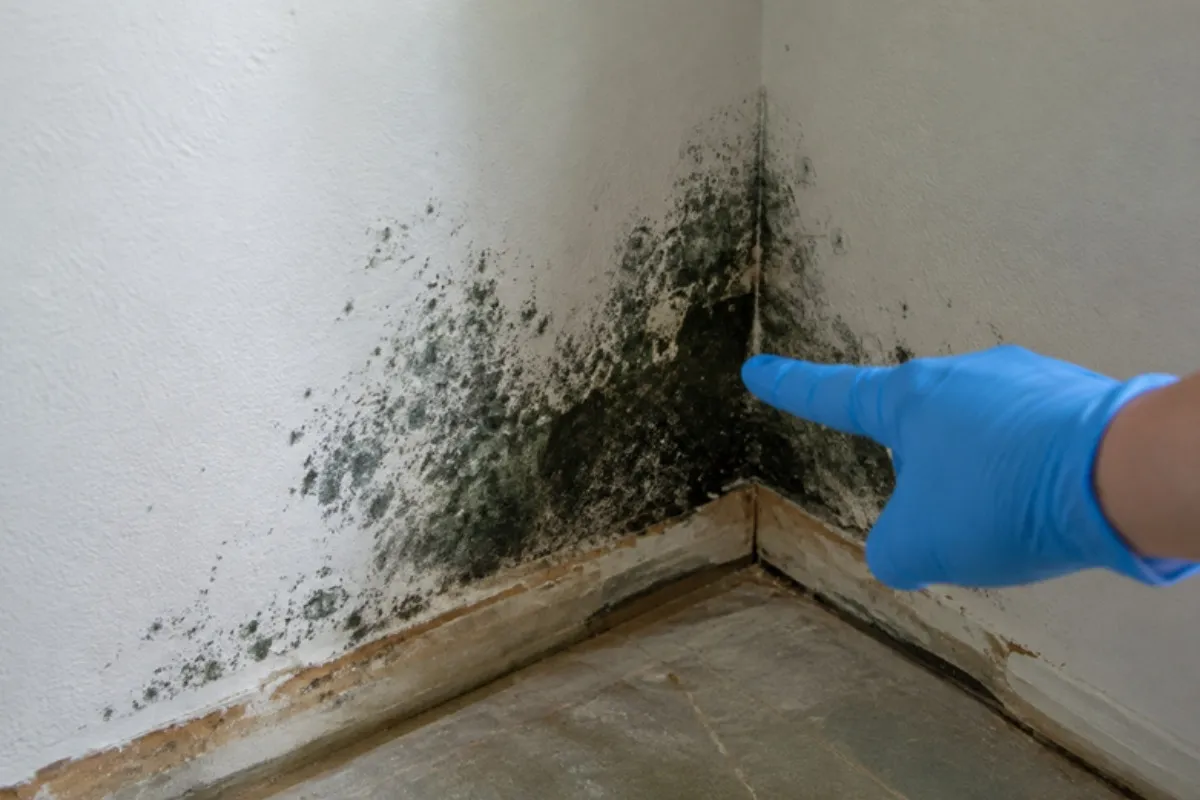
What people mean by "black mold"
Many molds grow dark, and the color alone does not tell you how risky a growth is or which species it is. EPA's position is simple: any mold growing indoors should be removed and the moisture that feeds it fixed. Mold can irritate the eyes, skin, nose, throat and lungs, and people with asthma or weakened immune systems should stay away from moldy areas. If someone in the house has health concerns, talk to a health professional rather than relying on a contractor's opinion.
Where dark growth turns up in Houston homes
- Drywall low on walls in homes that took water during Harvey or a later street flood and were not fully dried.
- Ceiling corners and supply vent covers where cold AC air meets humid indoor air.
- Behind washers, under sinks and around water heater closets with slow leaks.
- Window sills and baseboards on walls that take wind-driven rain.
Should you test it first?
Usually not. EPA says that when mold is visible, sampling is generally unnecessary, and there are no federal limits to compare a lab result against. A species name will not change the removal method. Testing earns its fee when you smell mold but can't find it, or after the work to confirm the area is clean.
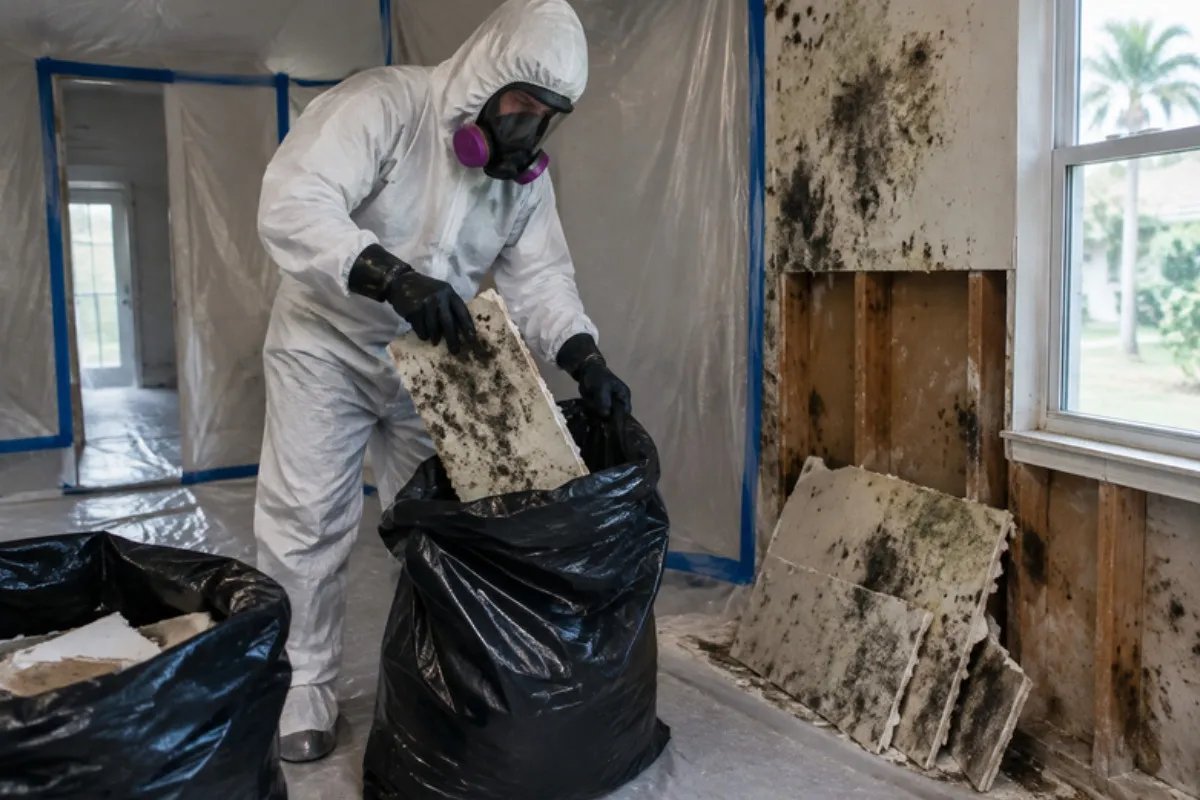
How removal works under Texas rules
- Assessment. A mold assessment consultant who holds a TDLR license inspects and writes a remediation protocol, given to you at least one day before work starts.
- Work plan. A different company, one that holds a TDLR mold remediation contractor license, writes a plan that follows the protocol. Texas law bars one company from doing both jobs on the same project.
- Containment and removal. The area is sealed off, porous materials such as moldy drywall and carpet come out, and other surfaces are cleaned.
- Clearance. The consultant returns for a post-remediation assessment. A pass leads to a Certificate of Mold Damage Remediation (CMDR) for your records, which can help with insurance underwriting and must go to a buyer if you sell within five years.
Homeowners may always clean mold in their own home without a license. EPA suggests that patches under about 10 square feet are usually a homeowner job, provided the leak is fixed and you don't paint over what remains.
What it costs
Angi's Houston cost data reports mold removal averaging $2,016, with most jobs between $863 and $3,329. Expect a separate fee for the consultant's protocol and clearance visit, because the law requires two companies. Price rises with the square footage, how much drywall or flooring has to come out, and whether the wall cavity is involved. Before signing, check both companies on TDLR's license search.
Black Mold Removal questions from Houston homeowners
Is black mold more dangerous than other mold?
Can I clean a small patch of black mold myself?
Why do I need two companies in Texas?
What paperwork should I get at the end?
Related mold services in Houston
Black Mold Removal in nearby cities and towns
Harris County
Fort Bend County
Montgomery County
Brazoria County
Galveston County
Liberty County
Sources
- EPA: Mold Cleanup in Your Home
- EPA: A Brief Guide to Mold, Moisture and Your Home
- EPA: Mold Information Slideshow (testing and sampling)
- TDLR: Mold Assessors and Remediators FAQs
- TDLR: Consumer Mold Information Sheet (pdf)
- Tex. Occ. Code 1958.151: Scope of Work Analysis
- 16 Tex. Admin. Code 78.150: Certificate of Mold Damage Remediation
- TDLR: License Search
- Angi: Mold removal cost in Houston, TX
Last updated: