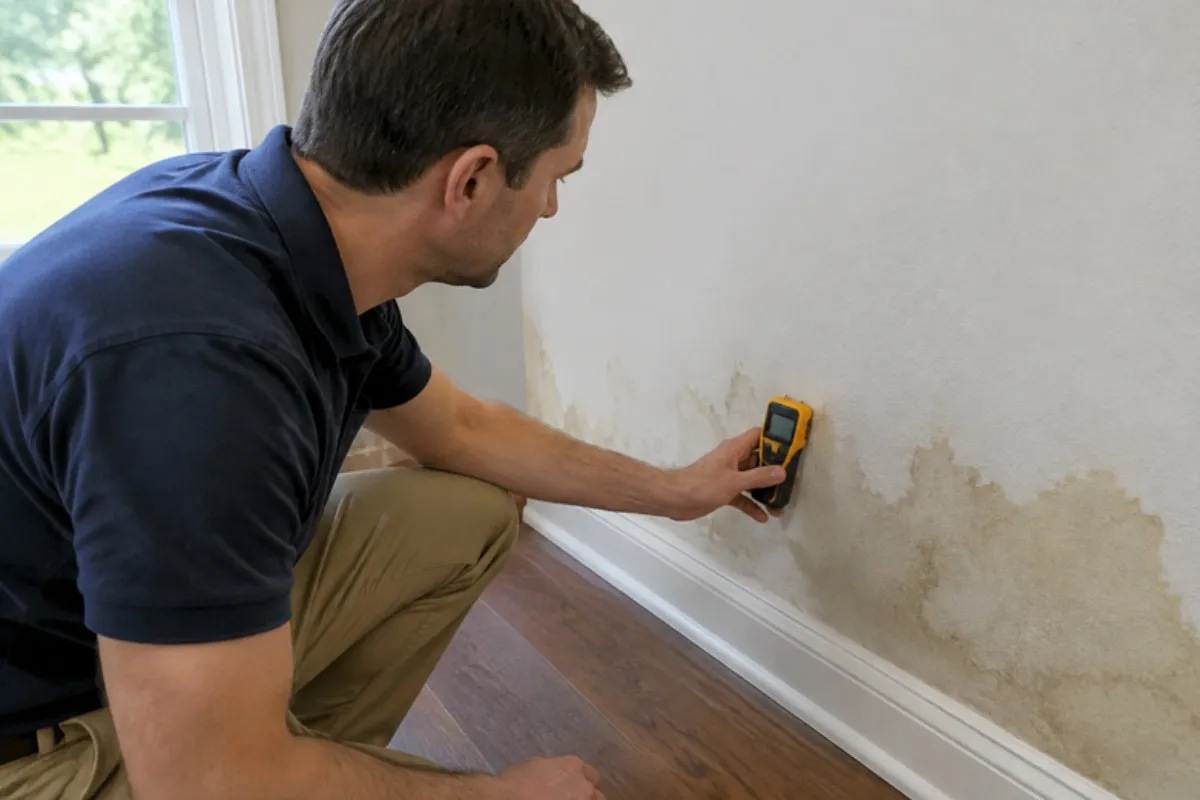
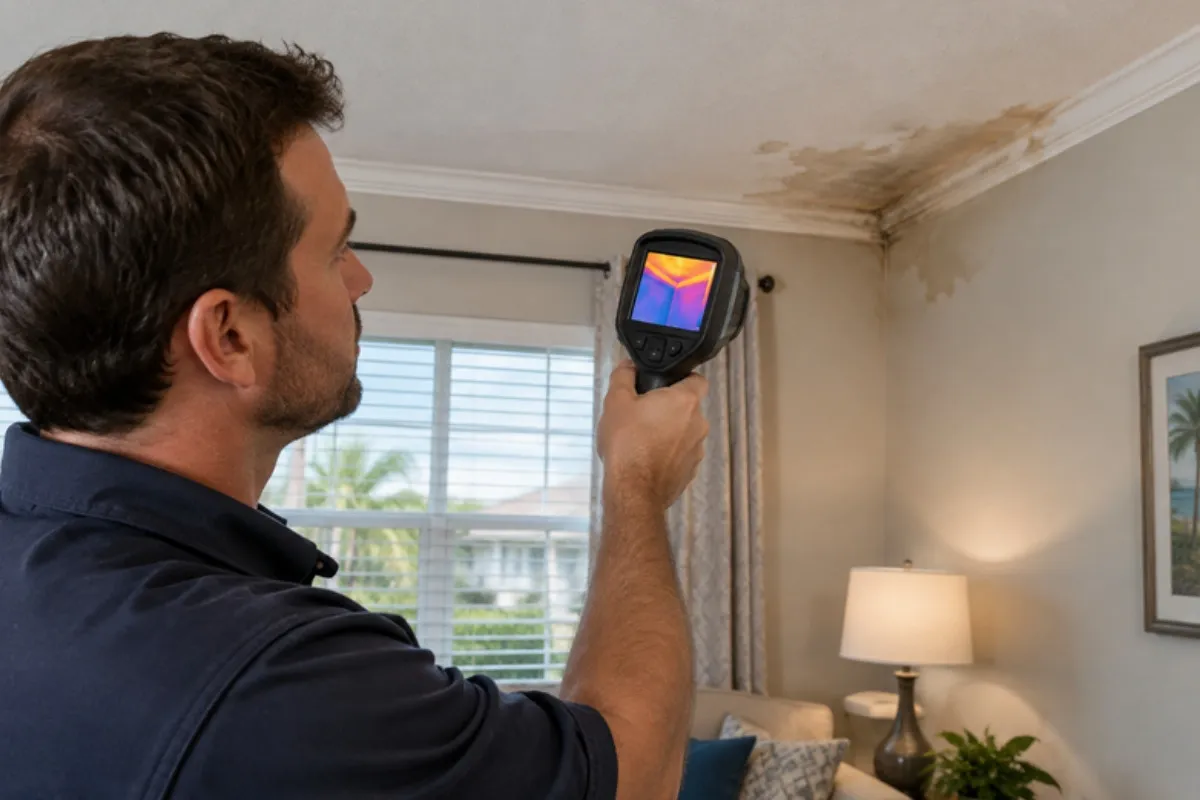
A mold inspection is a hands-on look for moisture and growth, using a flashlight, a moisture meter and sometimes a thermal camera, followed by a written report. In Texas this is mold assessment, done by someone who holds a TDLR mold assessment license, and that company cannot also do the removal on the same job. Call the number on this page to be connected with a local mold inspector or remediation company in Houston.
When an inspection is worth the money
If you can see a small patch on a bathroom ceiling and you know the cause, you probably do not need one; EPA says areas under about 10 square feet are usually a homeowner job. An inspection earns its fee when the smell is there but the mold is not, when water got behind walls or under flooring, when you are buying or selling, or when a remediation job is coming and Texas rules call for a written protocol anyway.
What the inspector checks in a typical Houston house
- The AC system. With the air conditioner running most of the year, attic air handlers, drain pans, condensate lines and supply vents sweat. Expect the inspector to open the return and look at the coil area.
- Exterior walls and baseboards. On slab-on-grade homes, water from a heavy storm or a flooded street wicks up drywall from the floor. A moisture meter along the baseboards tells more than eyes alone.
- The attic. Roof leaks, poorly vented bath fans and ducts that drip condensation onto insulation.
- Under the house, if there is one. Older pier-and-beam homes in some neighborhoods have crawl spaces that stay damp on clay soil that drains slowly.
- Windows, plumbing walls and the water heater closet.
Testing is not automatic
EPA says that when mold is visible, sampling is usually unnecessary, and there are no federal limits for mold spores to compare results against. A careful inspector explains why a sample would change the plan before charging for one. Surface or air samples make more sense for checking whether an area was cleaned properly.
What you should get in writing
If remediation is needed, the mold assessment consultant writes a protocol listing the rooms involved, how much material comes out, containment, protective gear and the clearance criteria. Texas law requires this before work starts, and the same consultant later checks the finished job. Because the assessor cannot be the remediator on the same project, an inspector who pushes you to hire their own crew is a warning sign.
Cost
Angi's Houston cost data reports mold inspection and testing averaging $453, with a typical range of $355 to $563 and a low-to-high spread of $245 to $845. National ranges from HomeGuide (2026) run $300 to $650 for an average-sized home, up to $1,000 for a large home with widespread mold. Square footage, attic access and the number of samples drive the price.
Renters
The Houston Health Department handles indoor air complaints in apartments and hotels but does not inspect or test for mold; it refers those to TDLR. Apartment habitability problems such as water leaks can be reported through Houston 311.
Mold Inspection questions from Houston homeowners
How long does a mold inspection take?
Does the inspector need a Texas license?
Can my Houston inspector recommend a remediation company?
Will the city inspect my apartment for mold?
Related mold services in Houston
Mold Inspection in nearby cities and towns
Harris County
Fort Bend County
Montgomery County
Brazoria County
Galveston County
Liberty County
Sources
- EPA: Mold Cleanup in Your Home
- EPA: Mold Information Slideshow (testing and sampling)
- TDLR: Mold Assessors and Remediators FAQs
- TDLR: Consumer Mold Information Sheet (pdf)
- TDLR: License Search
- Tex. Occ. Code 1958.151: Scope of Work Analysis
- Angi: Mold inspection and testing cost in Houston, TX
- HomeGuide: Mold Removal and Remediation Cost (2026)
- Houston Health Department: Indoor Air Quality
Last updated: