Commercial mold work in Texas follows the same TDLR rules as homes, with fewer exemptions: once contamination in a non-residential building or a residential property of 10 or more units reaches 25 contiguous square feet, the remediation must be done by a TDLR mold remediation license holder, under a protocol written by a separate assessment consultant. Plan for occupants, the HVAC system and a clearance check before spaces reopen. Call the number on this page to be connected with a local mold remediation company in Houston.
Who this page is for
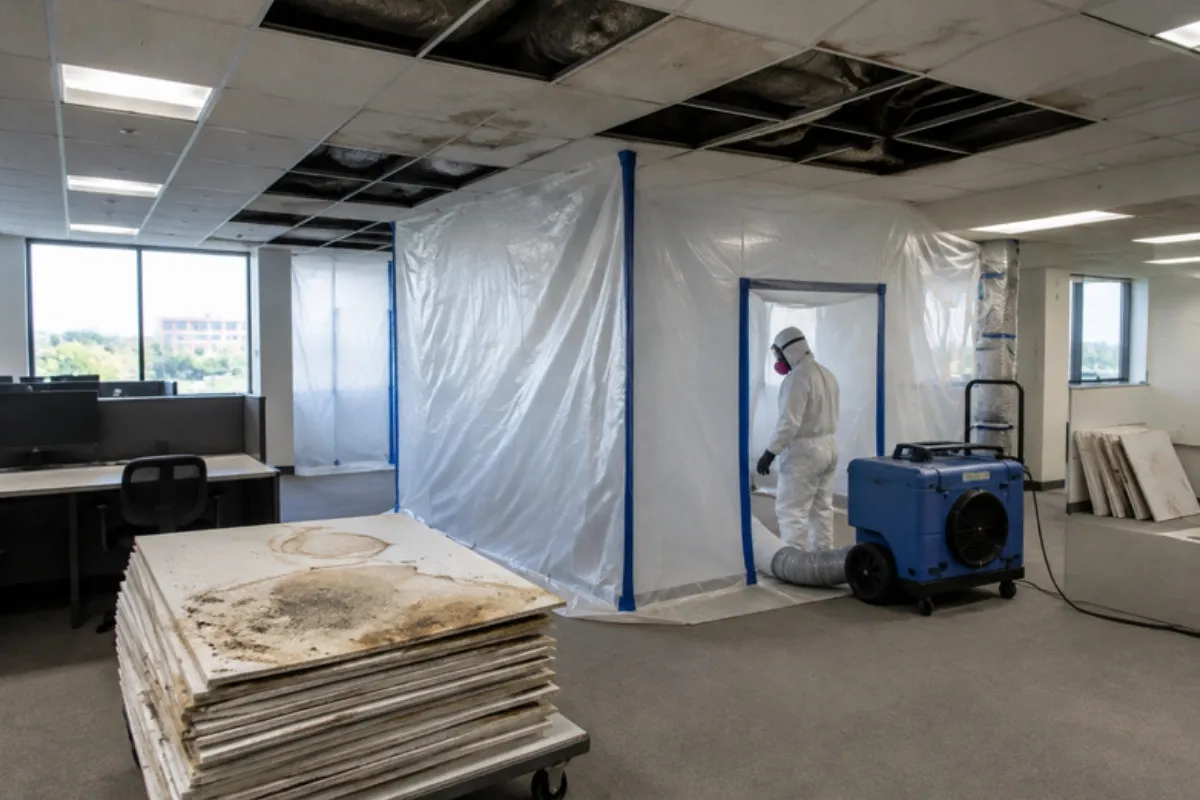
Offices, retail and restaurant space, warehouses, churches, medical offices, hotels and apartment communities across the Houston area. These buildings share a few problems: large rooftop or central AC systems that run most of the year, ceiling tiles that soak up leaks out of sight, and many people who need to keep using the space.
Where the Texas exemptions stop
| Property | Who may clean it without a TDLR mold license |
|---|---|
| Non-residential building | The owner or tenant and their employees, only while the contamination is under 25 contiguous square feet |
| Residential property with 10 or more units | The owner, managing agent or employees, only while the visible mold is under 25 contiguous square feet |
| Any property, hired outside help | No exemption: anyone paid to do mold work for others needs the TDLR license |
The order of work on a Texas project
- A mold assessment consultant inspects and writes the remediation protocol, delivered at least one calendar day before work begins.
- A separate remediation company writes a work plan that meets the protocol and, for 25 contiguous square feet or more, notifies TDLR at least five days before starting.
- Both must give you TDLR's Consumer Mold Information Sheet before any mold-related work.
- After removal, the same consultant does a post-remediation assessment and issues a passed clearance report.
- Within 10 days, the remediation contractor gives the owner before-and-after photos and a Certificate of Mold Damage Remediation.
Keeping the building running
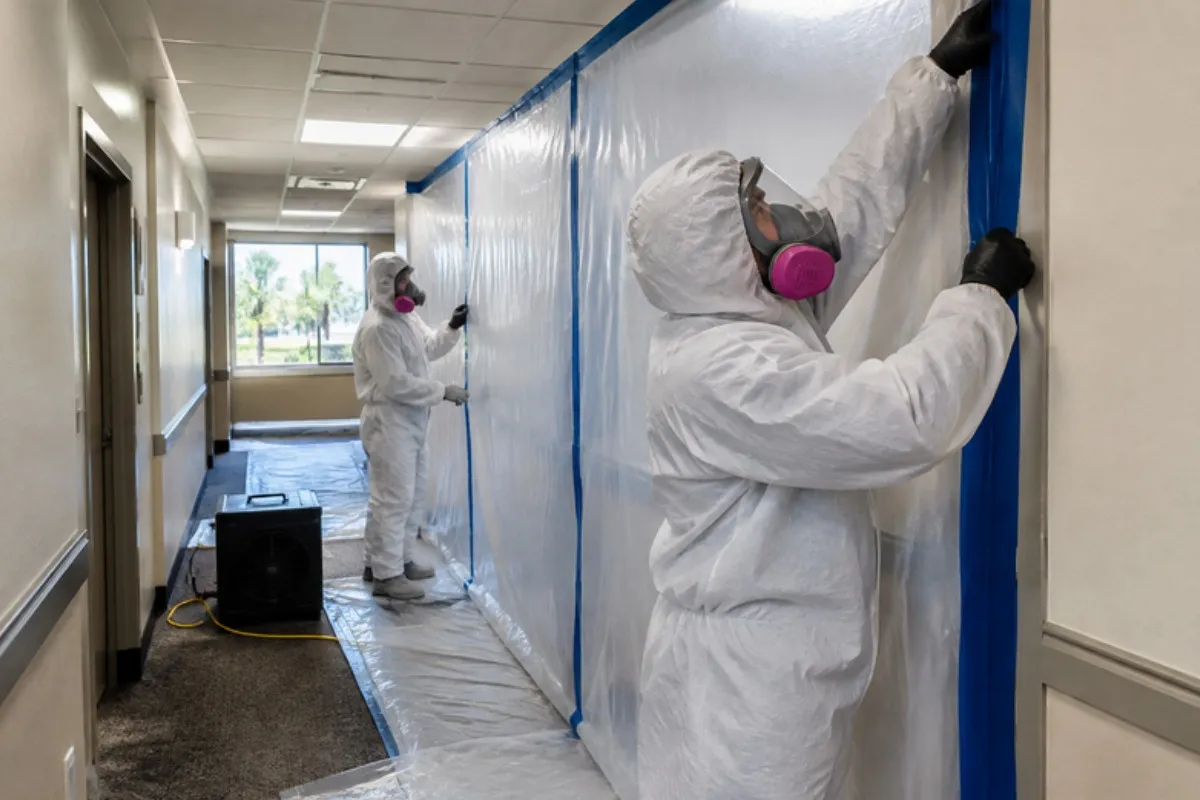
EPA's guide for schools and commercial buildings recommends containment sized to the problem and communication with occupants before work starts. If the HVAC system is suspected, EPA says not to run it, since it can spread mold through the building; ask the company how they will isolate zones or supply temporary cooling in Houston heat. Expect night or weekend scheduling, plastic barriers with negative air in larger jobs, and removal of wet ceiling tile, carpet and drywall, which EPA says may have to be thrown away.
Apartment communities
For apartments, the Houston Health Department responds to indoor air quality complaints in units, and the City's Multifamily Habitability program handles water leaks and minimum standards through Houston 311. Fixing leaks quickly and documenting work protects tenants and owners alike.
What drives price
Square footage, ceiling height, after-hours labor, how much material must go, HVAC involvement and two separate fees (consultant and remediator) all move the number. Ask each company for a written quote tied to the protocol, and check each license on TDLR's license search.
Commercial Mold Remediation questions from Houston homeowners
Can our maintenance staff handle a small mold problem?
Does TDLR need to be notified before commercial mold work?
Can the business stay open during remediation?
How do I confirm a company can legally do the work?
Related mold services in Houston
Commercial Mold Remediation in nearby cities and towns
Harris County
Fort Bend County
Montgomery County
Brazoria County
Galveston County
Liberty County
Sources
- TDLR: Mold Assessors and Remediators FAQs
- TDLR: Texas Mold Assessors and Remediators Law
- TDLR: Mold Remediation Notification Requirements
- TDLR: Consumer Mold Information Sheet (pdf)
- TDLR: License Search
- Tex. Occ. Code 1958.151: Scope of Work Analysis
- 16 Tex. Admin. Code 78.150: Certificate of Mold Damage Remediation
- EPA: Mold Remediation in Schools and Commercial Buildings (pdf)
- EPA: Mold Cleanup in Your Home
- Houston Health Department: Indoor Air Quality
- City of Houston: Department of Neighborhoods
Last updated: