A Deer Park business with mold covering 25 contiguous square feet or more needs a company holding a TDLR mold remediation license, plus a separate consultant to write the protocol and confirm clearance. Smaller spots can be cleaned by the owner, tenant or their employees. Call the number on this page to be connected with a local mold remediation company in Deer Park.
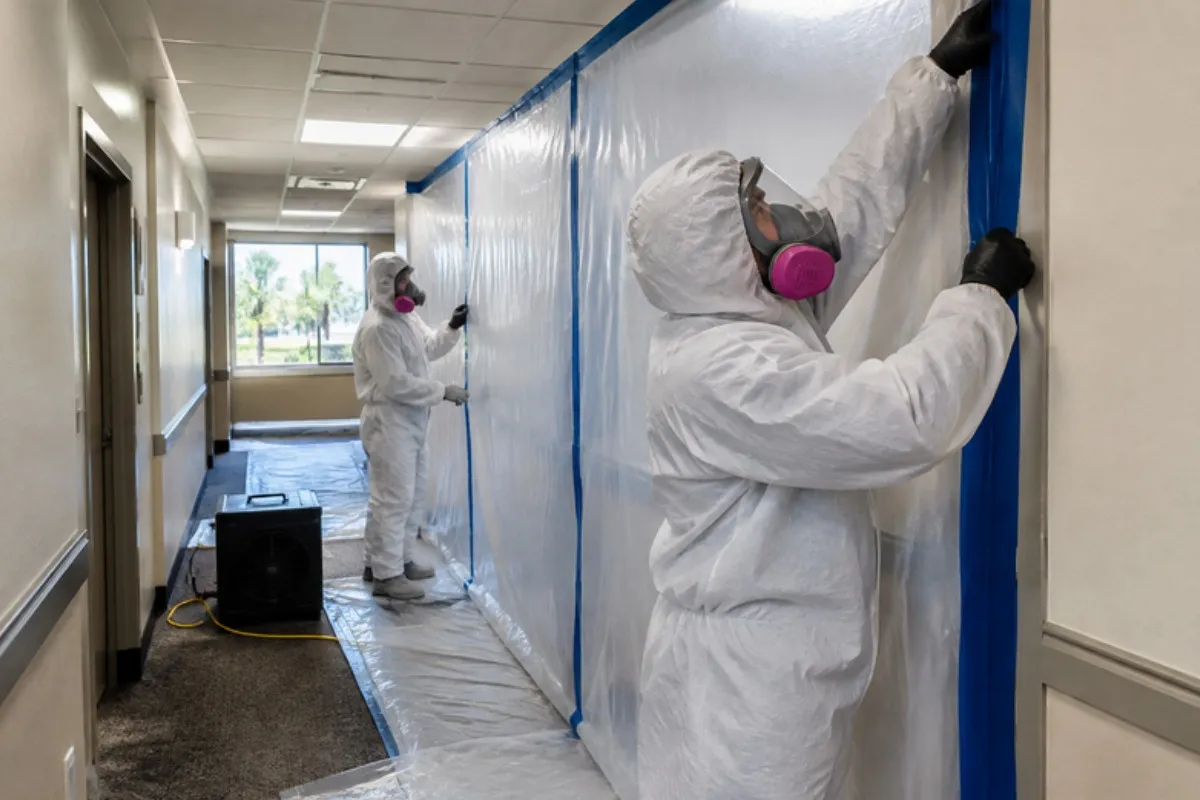
Why does mold show up in Deer Park commercial buildings?
Deer Park is a city about 21 miles from downtown Houston, bounded on the north by the Houston Ship Channel and home to major industrial sites such as Shell Chemicals, the Pemex refinery and Dow Chemical. Its offices, shops and service businesses along Center Street and East San Augustine Street sit in hot, humid air for much of the year. In those conditions, a slow roof leak, a clogged condensate line or a cold duct wrapped in damp insulation can feed mold for weeks before anyone notices. Water in a ceiling cavity is the classic case: tiles stain, the grid hides the rest, and growth spreads across the back of the drywall.
What is the in-house limit?
In a non-residential building, the owner or tenant and their employees may clean contamination under 25 contiguous square feet without a TDLR mold license. At 25 contiguous square feet or more, a TDLR mold remediation license holder must do the work. For residential properties with 10 or more units, the same 25-foot line applies to the owner, managing agent and staff. Anyone paid to do mold work for someone else needs the license no matter the size.
Who writes the plan and who signs off?
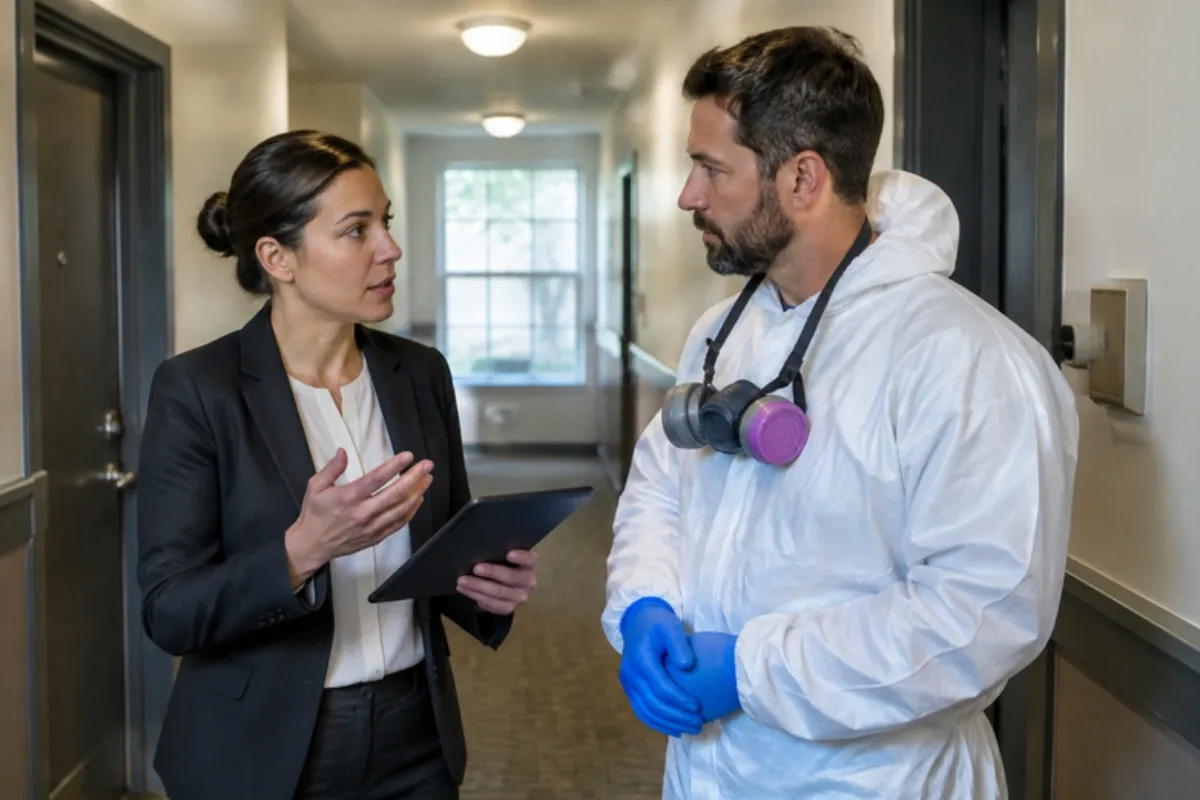
A mold assessment consultant inspects and writes a protocol covering the areas, materials, protective equipment, containment and clearance criteria. The remediation company follows it with a work plan, and for jobs at or above the threshold it notifies TDLR at least five days ahead. Texas law does not allow one firm to do both roles on the same project. Afterward the consultant who wrote the protocol performs the post-remediation assessment, and within 10 days the remediation contractor provides before-and-after photos and a Certificate of Mold Damage Remediation, signed by both firms.
One local note
Permits for repairs after mold removal come from the City of Deer Park Building Department at 710 E. San Augustine. If a tenant or neighbor needs to report a building problem, the city takes code concerns through its online Report a Concern form, and Harris County Public Health is the county health department.
Commercial Mold Remediation questions in Deer Park
Does TDLR have to be notified before the work starts?
Can the business stay open during remediation?
How do we check a company's TDLR license?
Do we need a building permit to rebuild afterward?
More mold services in Deer Park
Commercial Mold Remediation nearby
Sources
- TDLR: Mold Assessors and Remediators FAQs
- TDLR: Texas Mold Assessors and Remediators Law
- TDLR: Texas Mold Remediation Notification Requirements
- TDLR: License Search
- 16 Tex. Admin. Code 78.150: Photographs; Certificate of Mold Damage Remediation; Duty of Property Owner
- City of Deer Park: Building Department
- City of Deer Park: How Do I...
- Harris County Public Health: Neighborhood Nuisance
- Wikipedia: Deer Park, Texas
Last updated: