AC and duct mold in League City most often grows on the coil, in a drain pan that holds water, on attic ducts that sweat and around supply grilles. Getting rid of it means correcting the moisture and cleaning or replacing the contaminated parts under a Texas protocol, with a clearance check afterward. Call the number on this page to be connected with a local mold remediation company in League City.
League City and its cooling systems
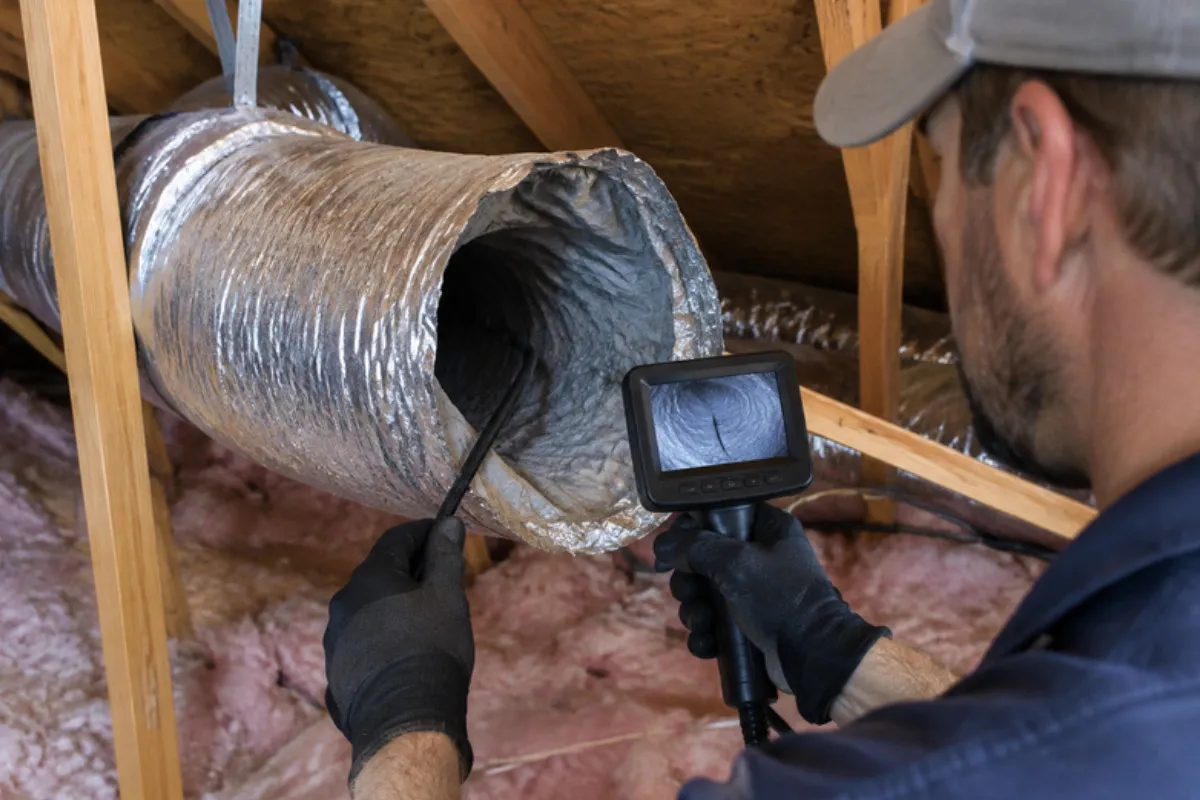
League City is a large Galveston County suburb about 29 miles from Houston, settled where Clear Creek meets Chigger Bayou, with marinas and waterside resorts along its Clear Lake-area shoreline. Cowart's Creek and Magnolia Bayou also run through the area. Like much of the region, many homes here have the air handler in the attic and duct runs that cross hot attic space before reaching cool rooms, which sets up condensation every summer. Clogged condensate lines, crushed flex duct and units that short-cycle without drying the air are the most common reasons a League City system starts growing mold, and heavy rain that keeps the house closed up adds to the indoor moisture.
What to do now
- Pause the system if mold inside it is suspected. EPA advises against running a contaminated HVAC system.
- Trace the water. See if the outdoor condensate line drips and whether there's water in the secondary pan.
- Hold down humidity. A dehumidifier helps keep rooms under 60 percent while you wait.
- Bag the filter. If it's wet or spotted, set it aside for the assessor to see.
- Write the timeline. Note when the smell or spots began and any recent AC service or roof work.
- Don't fog the ducts. Sprays and foggers don't remove growth.
- Check licenses. Look up both companies on TDLR's license search.
What you see and why
| Sign | Usual cause |
|---|---|
| Spots around ceiling registers | Humid room air on cold grilles |
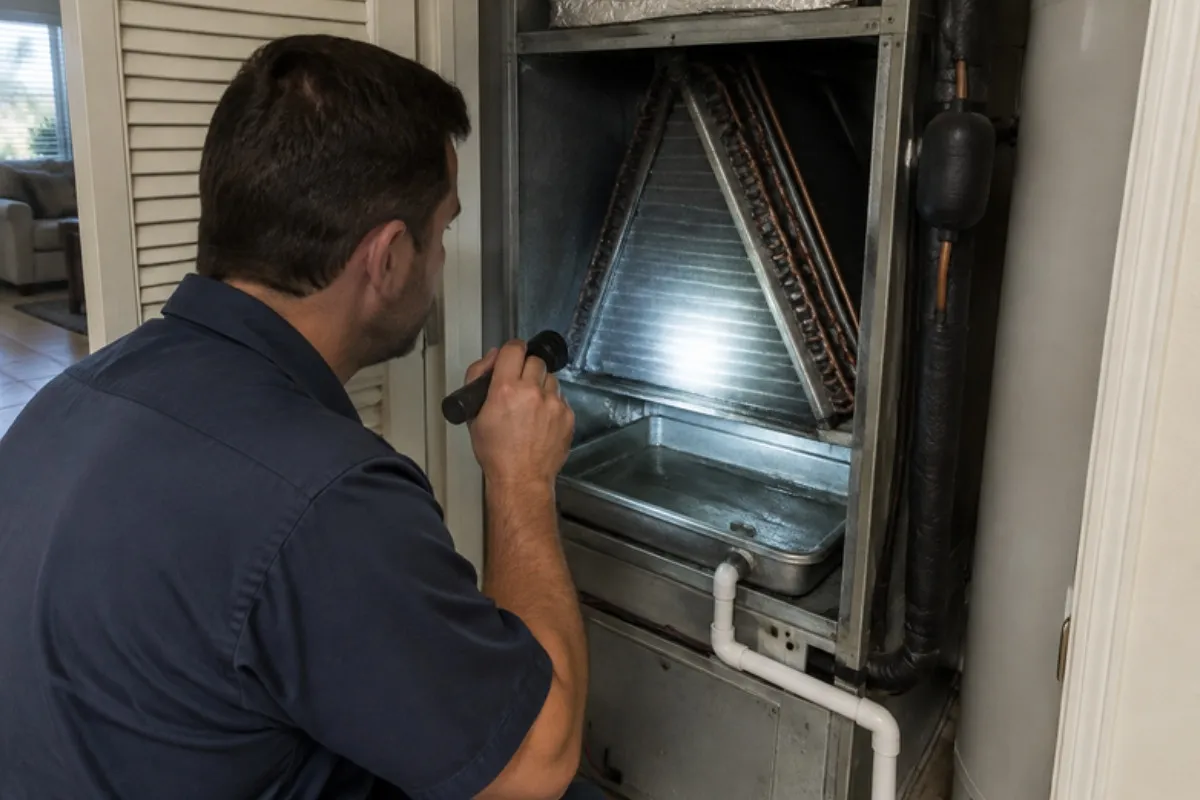
| Odor in the AC closet or hallway return | Standing water in the pan or a slow drain |
| Ceiling stain on the second floor | Overflowing attic pan |
| Water dripping from a vent | Sweating duct boot with poor insulation |
| Rust in the pan or cabinet | Years of condensation, sometimes salt air |
Cost factors
National ranges (HomeGuide, 2026) put HVAC system or duct mold work at $2,000 to $10,000, and Angi's Houston cost data reports inspection and testing averaging $453. Two-story attics, more than one system, flex duct replacement and pan or coil repairs set the total, along with the separate assessor's fee that Texas law requires. Replacement work goes through the League City Building Department at 500 W. Walker St. (281-554-1429). Renters can report unrepaired leaks or failing equipment to Code Compliance through 311, the online Request Tracker or 281-554-1480. The Galveston County Health District does not handle mold.
AC & Air Duct Mold Removal questions in League City
Will cleaning the ducts be enough?
Can I keep using the AC until the work is done?
What paperwork should I get when the job is finished?
My rental's AC smells musty. What can I do in League City?
More mold services in League City
AC & Air Duct Mold Removal nearby
Sources
- EPA: Mold Cleanup in Your Home
- EPA: Should You Have the Air Ducts in Your Home Cleaned?
- TDLR: Mold Assessors and Remediators FAQs
- TDLR: License Search
- HomeGuide: How Much Does Mold Removal and Remediation Cost? (2026)
- Angi: Compare Quotes from Mold Inspectors & Testing Services (Houston, TX)
- Tex. Prop. Code 92.052: Landlord's Duty to Repair or Remedy
- TexasLawHelp: Right to Repairs as a Tenant
- Galveston County Health District: File a Public Health Complaint
- Wikipedia: League City, Texas
- City of League City: Building Department packet (pdf)
- City of League City: Code Compliance
Last updated: