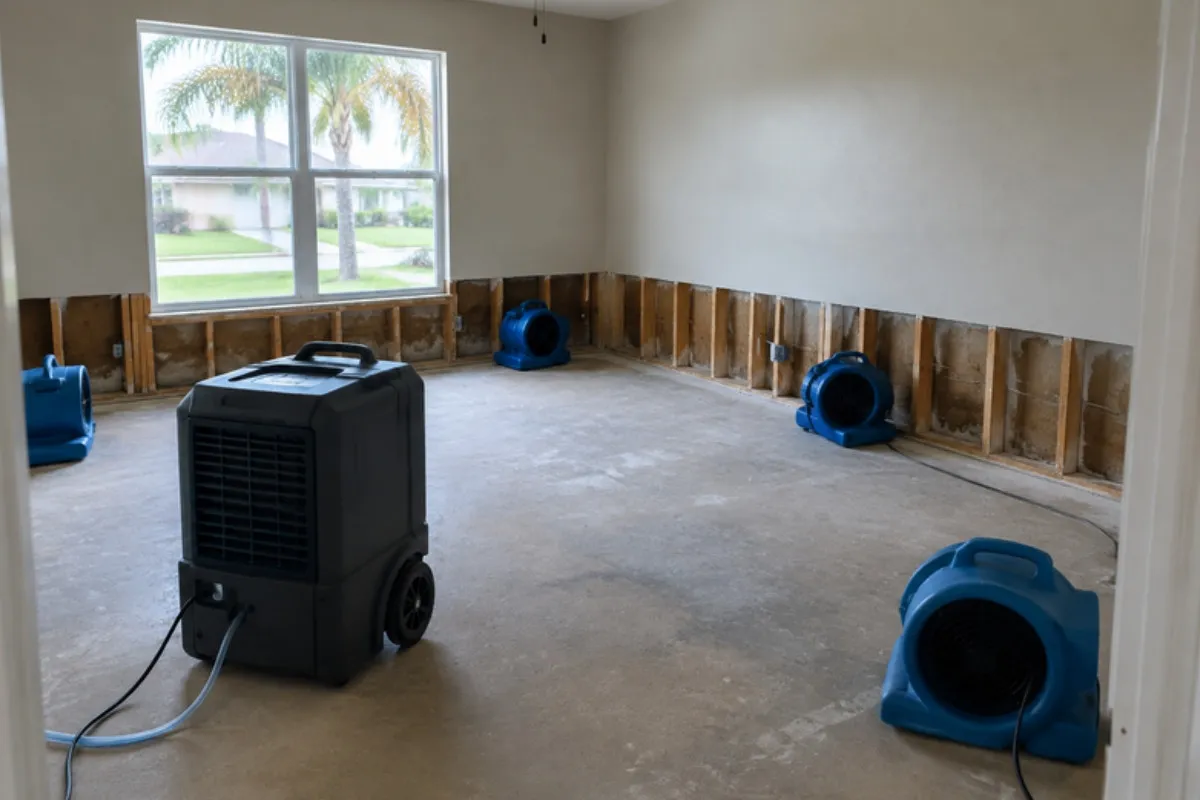
Post-flood mold removal in Sugar Land deals with what water leaves behind once drying has started: soaked drywall, insulation and flooring are removed under containment, framing is cleaned and the area is tested for clearance. A mold assessment consultant writes the plan and a separate TDLR-regulated remediation company does the work. Call the number on this page to be connected with a local mold remediation company in Sugar Land.
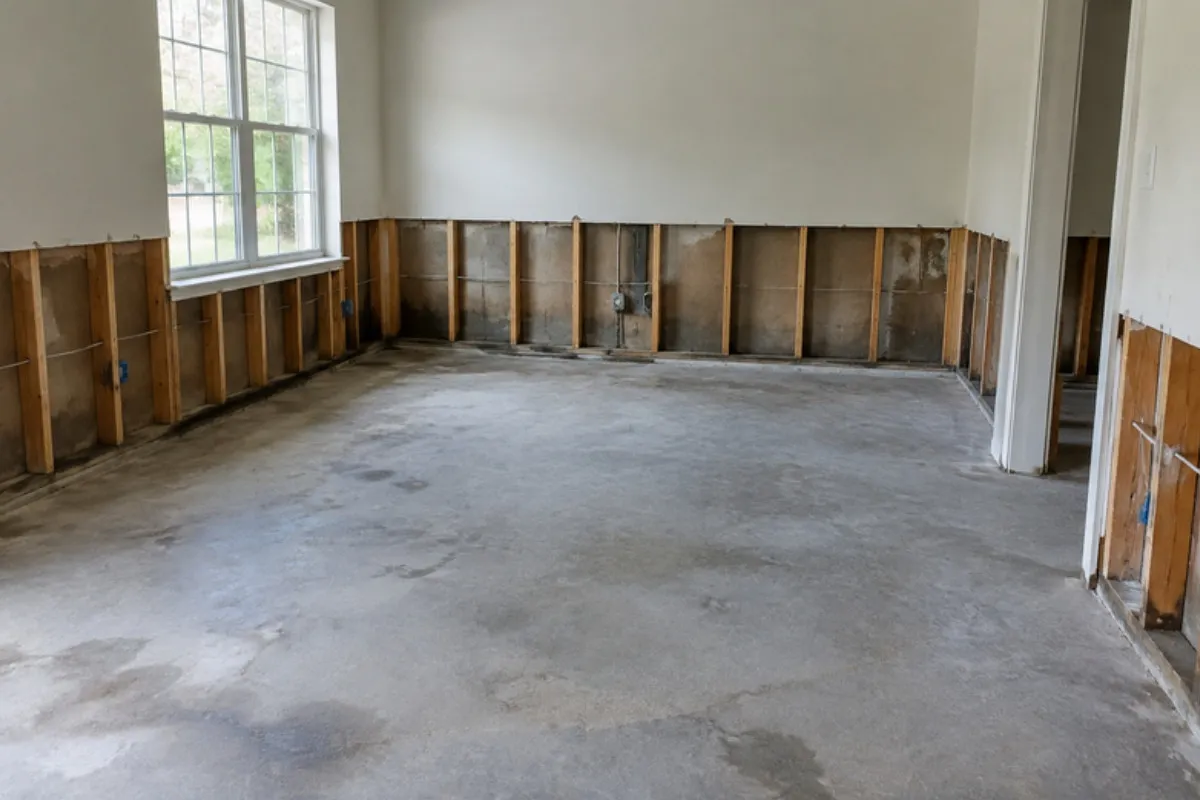
Signs mold has followed the water
- A musty smell that hangs on after fans and dehumidifiers have run for days
- Gray, green or black spotting low on walls, on baseboards or behind furniture that sat in water
- Drywall that feels soft or crumbles at the bottom edge
- Laminate or wood flooring that cups, lifts or smells when pulled up
- Staining inside lower cabinets or under sinks
- Spots around supply registers, or a stale smell when the AC starts
Color does not tell you how risky a mold is. EPA notes mold can irritate the eyes, skin, nose, throat and lungs; people with asthma or weakened immune systems should stay away from moldy areas.
Water and homes in Sugar Land
Sugar Land began as a sugar plantation and Imperial Sugar company town on the Brazos River floodplain and grew into a suburb of about 111,000 people with thirteen master-planned communities, among them First Colony, Sugar Creek, Greatwood, New Territory and Telfair. During the record Memorial Day 2016 Brazos flood, no Sugar Land homes were reported flood-damaged, though the Brazos Turnaround and Sugar Land Memorial Park closed and parts of University Boulevard shut temporarily. For most households here, the water that leads to mold comes from storms overwhelming slow-draining clay ground, roof damage, slab or supply leaks, or an attic AC drain pan that overflows onto ceilings below.
What affects cost
Angi's Houston cost data reports an average of $2,016 for mold removal, typically $863 to $3,329. National ranges (HomeGuide, 2026) put 100 to 300 square feet at $1,500 to $6,000 and larger areas at $6,000 to $15,000. Cost follows the wet area, how much drywall, cabinetry and flooring has to go, AC involvement, and the separate assessment consultant that Texas law requires.
What happens when you call
You describe the water event and the damage, and you're connected with independent local companies. The consultant writes a protocol before removal; the remediator follows it inside containment; the consultant clears the space; and you receive a Certificate of Mold Damage Remediation. Rebuild permits go through Sugar Land Permits & Inspections at 2700 Town Center Blvd. North, where remodel submittals need a floor-plan drawing plus any wiring, plumbing or mechanical changes. Tenants in registered rentals can complain to the city's Rental Licensing Program if an owner fails to maintain the property.
Post-Flood Mold Removal questions in Sugar Land
Is it safe to run the AC in a house that flooded?
Do I need mold testing if I can already see the mold?
Do I have to share flood mold paperwork if I sell my Sugar Land home?
Do I need a permit to rebuild after flood mold removal in Sugar Land?
More mold services in Sugar Land
Post-Flood Mold Removal nearby
Sources
- EPA: Mold Cleanup in Your Home
- EPA: Homeowner's and Renter's Guide to Mold Cleanup After Disasters (pdf)
- EPA: Mold Information Slideshow (testing and sampling)
- TDLR: Mold Assessors and Remediators FAQs
- 16 Tex. Admin. Code 78.150: Photographs; Certificate of Mold Damage Remediation; Duty of Property Owner
- Angi: How much do mold removal services typically cost? (Houston, TX)
- HomeGuide: How Much Does Mold Removal and Remediation Cost? (2026)
- Wikipedia: Sugar Land, Texas
- Community Impact: Fort Bend County recuperates after Memorial Day weekend floods
- City of Sugar Land: Residential permits
- City of Sugar Land: Permits & Inspections quick resource guide
- City of Sugar Land: Rental Licensing
- City of Sugar Land: Code Enforcement
Last updated: