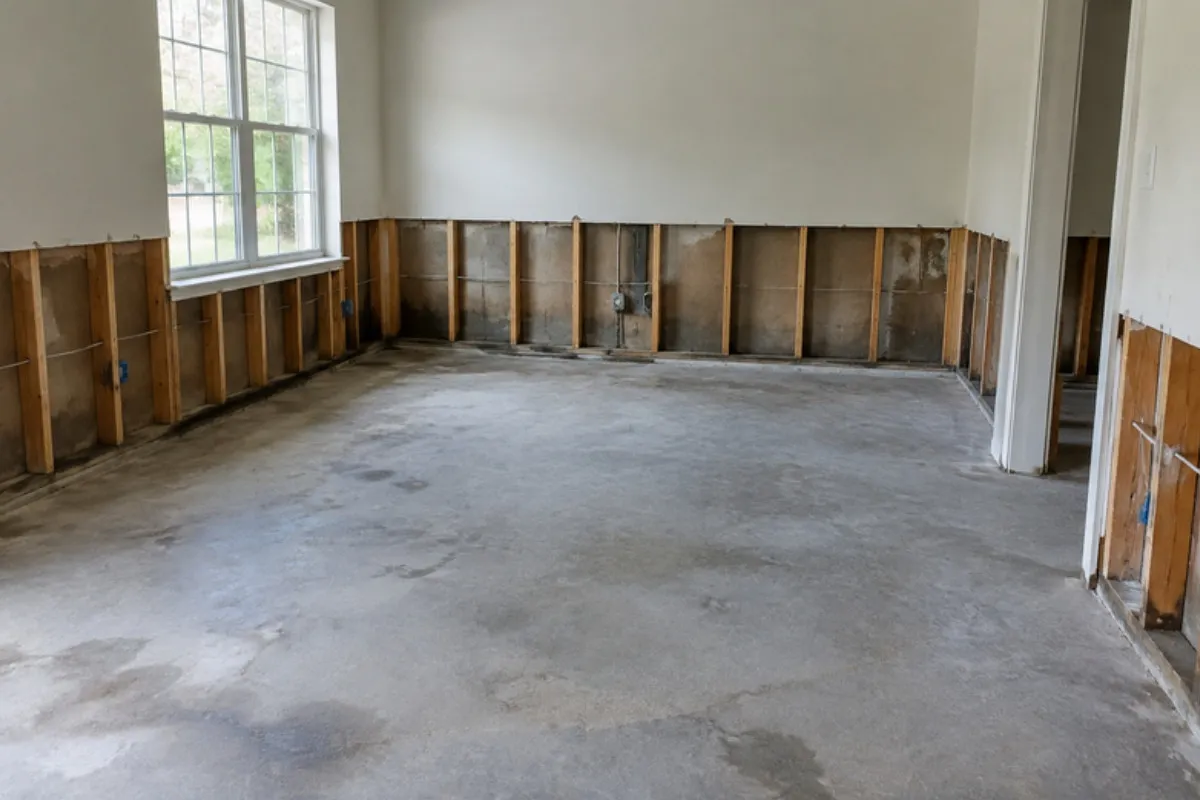
If storm water or a plumbing failure soaked a Webster home or office and materials stayed wet for more than a day or two, mold removal means cutting out the wet porous materials and cleaning the structure under a Texas protocol. A mold assessment consultant plans the work and a separate company carries it out. Call the number on this page to be connected with a local mold remediation company in Webster.
Webster's setting
Webster is a city of about 12,500 people roughly 26 miles from downtown Houston, a bedroom community tied to the Clear Lake area and the high-tech work around NASA's Johnson Space Center. Clear Creek forms its southeastern border, which is also the line between Harris and Galveston counties. Being near a creek is not the same as flooding, and each property has its own risk. Across this part of the region, though, heavy tropical rain on flat land, slow-draining clay and high humidity are a familiar mix, and buildings that take water rarely dry without help.
Drying vs mold removal
| Drying | Mold remediation | |
|---|---|---|
| Purpose | Remove moisture from the structure | Remove growth and contaminated materials |
| Order | First | After the source is fixed and drying is underway |
| Who | Owner or a drying contractor | A company that holds a TDLR mold remediation contractor license, separate from the assessor |
| Proof at the end | Moisture readings | Clearance report and a Certificate of Mold Damage Remediation |
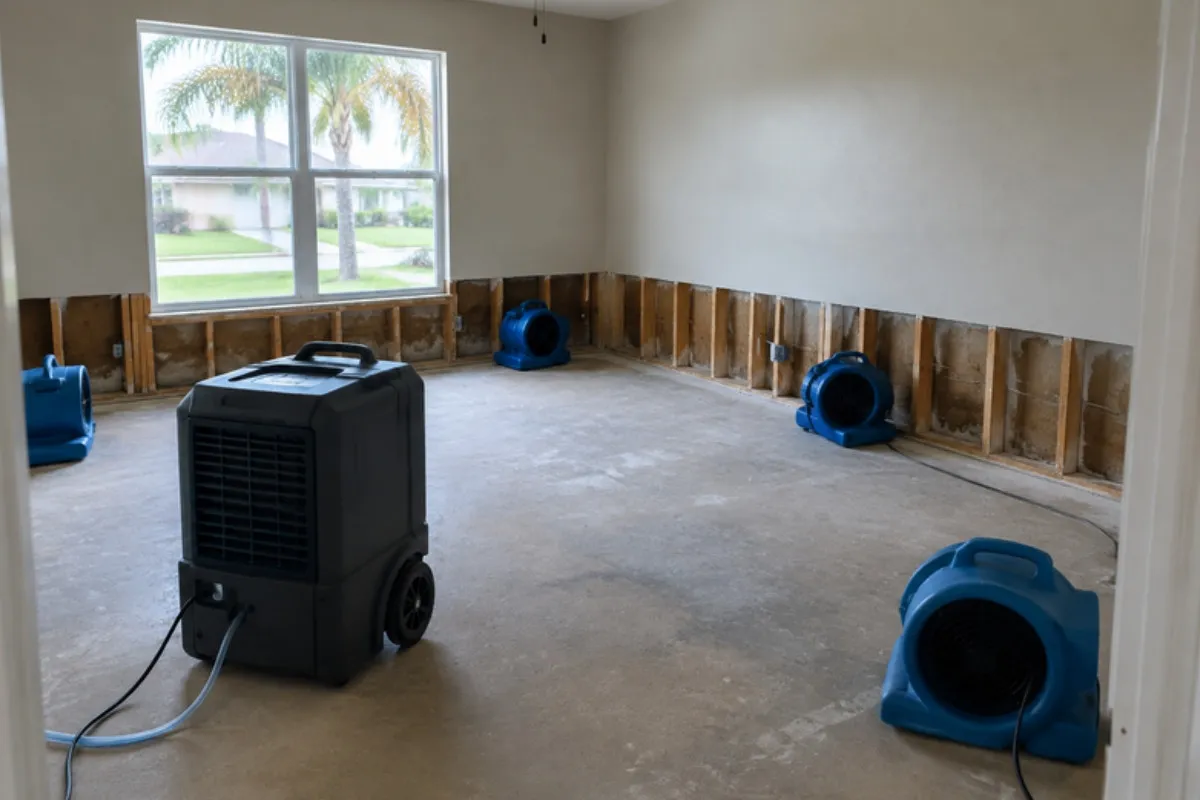
Skipping the drying step usually means the mold returns. Skipping the mold step can leave growth sealed inside new walls. The two jobs can overlap in time, but the mold company should be working on materials that are drying, not ones still holding water, or the clearance check is likely to fail and the job has to be repeated at your expense.
Signs to look for
- A smell that is worse in the morning when the house is closed up
- Stains or soft spots along the lower edge of walls and cabinets
- Ceiling stains below an attic air handler after a storm
- Mold on the back of furniture pushed against an exterior wall
Timing and local rules
EPA says to dry wet materials within 24 to 48 hours. Past that window, plan on an assessment before closing walls. The protocol comes at least a day before removal, and areas of 25 contiguous square feet or more are reported to TDLR five days ahead. Offices follow the non-residential rule: owners and tenants are exempt from the TDLR license only below 25 contiguous square feet. Rebuild permits and inspections go through the City of Webster Building Division, which has adopted the International Property Maintenance Code, and any occupied building needs a Certificate of Occupancy.
Post-Flood Mold Removal questions in Webster
What does post-flood mold removal cost?
My rental took on water and the landlord has not made repairs. What can I do?
How do I check a mold company before hiring one after a storm?
How soon after floodwater gets in does mold start?
More mold services in Webster
Post-Flood Mold Removal nearby
Sources
- EPA: Homeowner's and Renter's Guide to Mold Cleanup After Disasters (pdf)
- EPA: Mold Cleanup in Your Home
- TDLR: Mold Assessors and Remediators FAQs
- TDLR: Consumer Mold Information Sheet (pdf)
- TDLR: License Search
- TDLR: Texas Mold Remediation Notification Requirements
- 16 Tex. Admin. Code 78.150: Photographs; Certificate of Mold Damage Remediation; Duty of Property Owner
- Tex. Prop. Code 92.052: Landlord's Duty to Repair or Remedy
- Angi: How much do mold removal services typically cost? (Houston, TX)
- City of Webster: Building Division
- City of Webster: Community Development
- Wikipedia: Webster, Texas
Last updated: