Mold testing in Danbury is lab analysis of air or surface samples taken by a mold assessor, usually as part of a moisture inspection of the house. It is worth doing when you suspect hidden growth and usually not when you can already see the mold. Call the number on this page to be connected with a local mold inspector in Danbury.

Our house is out in the country. Does testing still make sense here?
It can, because the moisture sources follow you out of the city. Danbury is a small Brazoria County city of about 1,700 people, roughly 39 miles from Houston along County Road 171 and the Union Pacific line, with Flores Bayou running beside town. The 2020 census counted every resident as rural. Homes here still face long humid summers, an air conditioner that runs much of the year, and hard rain on flat land that stays wet. A sample helps when a smell lingers in a closed room, when an old leak was patched without looking inside the wall, or when you want proof before spending money on removal. It doesn't help much if a patch of growth is already obvious; EPA calls sampling of visible mold usually unnecessary.
What does a good assessor actually do on the visit?
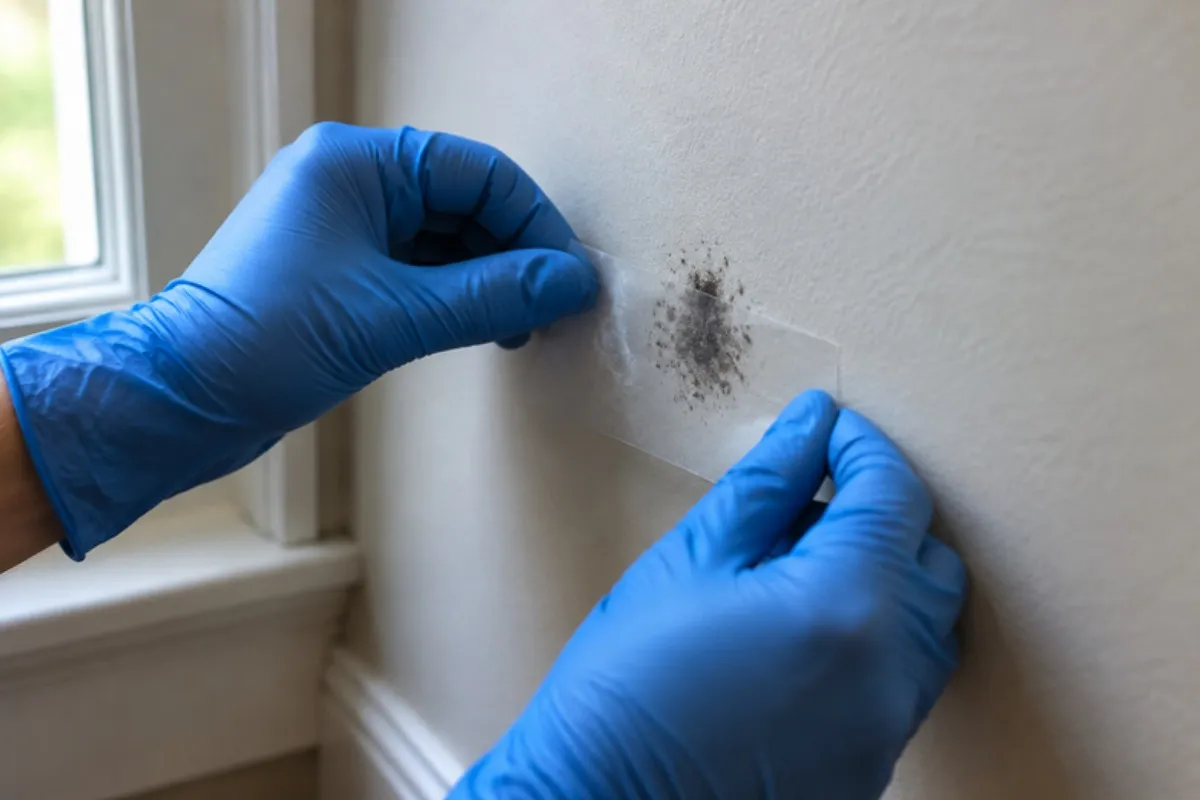
They start with the house, not the lab. Expect a look at the roofline, gutters and grading, then moisture readings along exterior walls, under sinks, around the water heater and at the AC air handler and drain pan. Only then do samples come out: air drawn through a cassette in the suspect room and outdoors for comparison, or a swab from a stain to identify it. The lab report lists spore counts and types, and the assessor explains what they mean together with the moisture findings. Because there are no EPA or federal limits for mold spores, comparison and context are what make a result meaningful.
What happens if the test finds mold?
The assessor, who must hold a TDLR mold assessment license, can write a remediation protocol listing the areas, materials, containment and clearance criteria. Texas law requires that a different company do the removal on that project. When the work is done, the same consultant returns for the post-remediation assessment. Angi's Houston cost data reports inspection and testing averaging $453, usually $355 to $563, so budget for that plus the separate removal bill.
A Danbury note
Repairs after removal need a permit from Danbury City Hall at 6102 5th Street, which covers altering, repairing and improving buildings; inspections go through a third-party SafeBuilt inspector and are scheduled at 979-922-1551 ext. 4. New construction also needs a Letter of No Objection from Danbury Drainage District No. 8 before the city issues permits.
Mold Testing questions in Danbury
Will Brazoria County test my home for mold?
Are store-bought mold test kits worth using?
How should I get the house ready for an air test?
Who can I hire to test for mold in Texas?
More mold services in Danbury
Mold Testing nearby
Sources
- EPA: Mold Information Slideshow (testing and sampling)
- TDLR: Mold Assessors and Remediators FAQs
- TDLR: License Search
- Tex. Occ. Code 1958.151: Scope of Work Analysis
- Angi: Compare Quotes from Mold Inspectors & Testing Services (Houston, TX)
- Brazoria County Health Department
- City of Danbury: Permits
- Wikipedia: Danbury, Texas
Last updated: