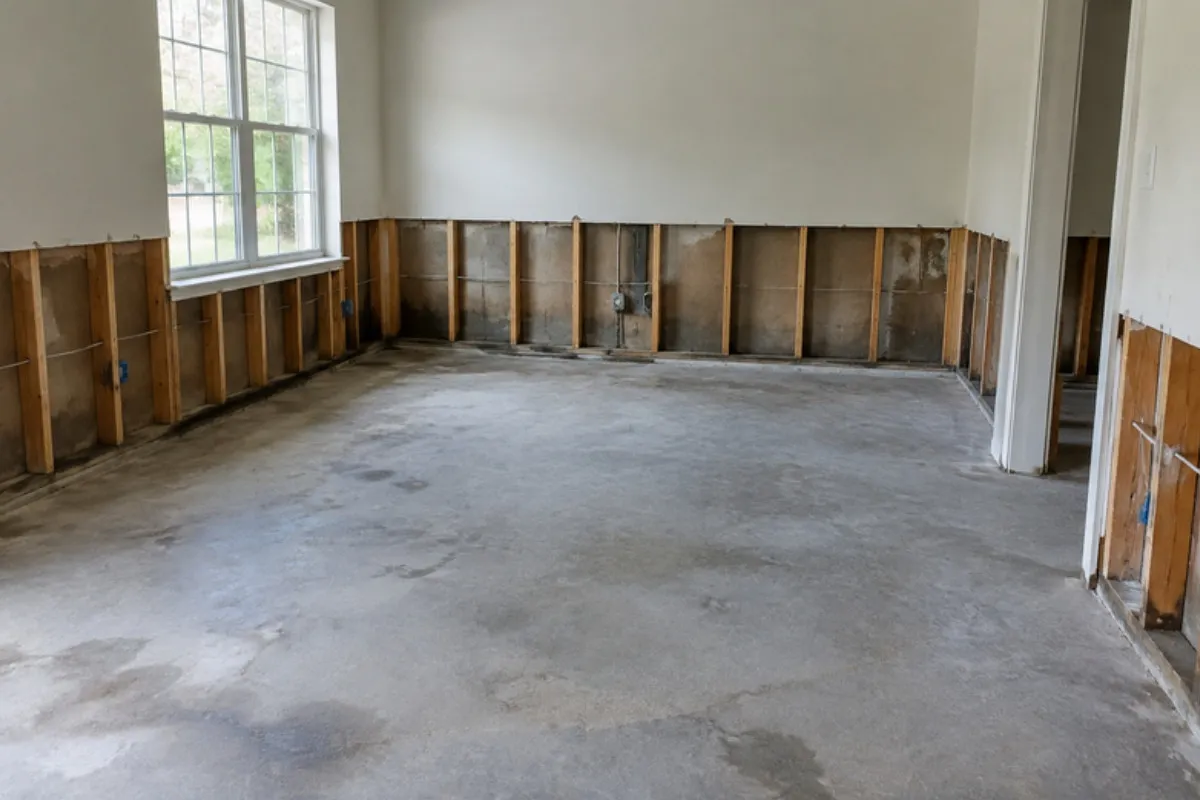
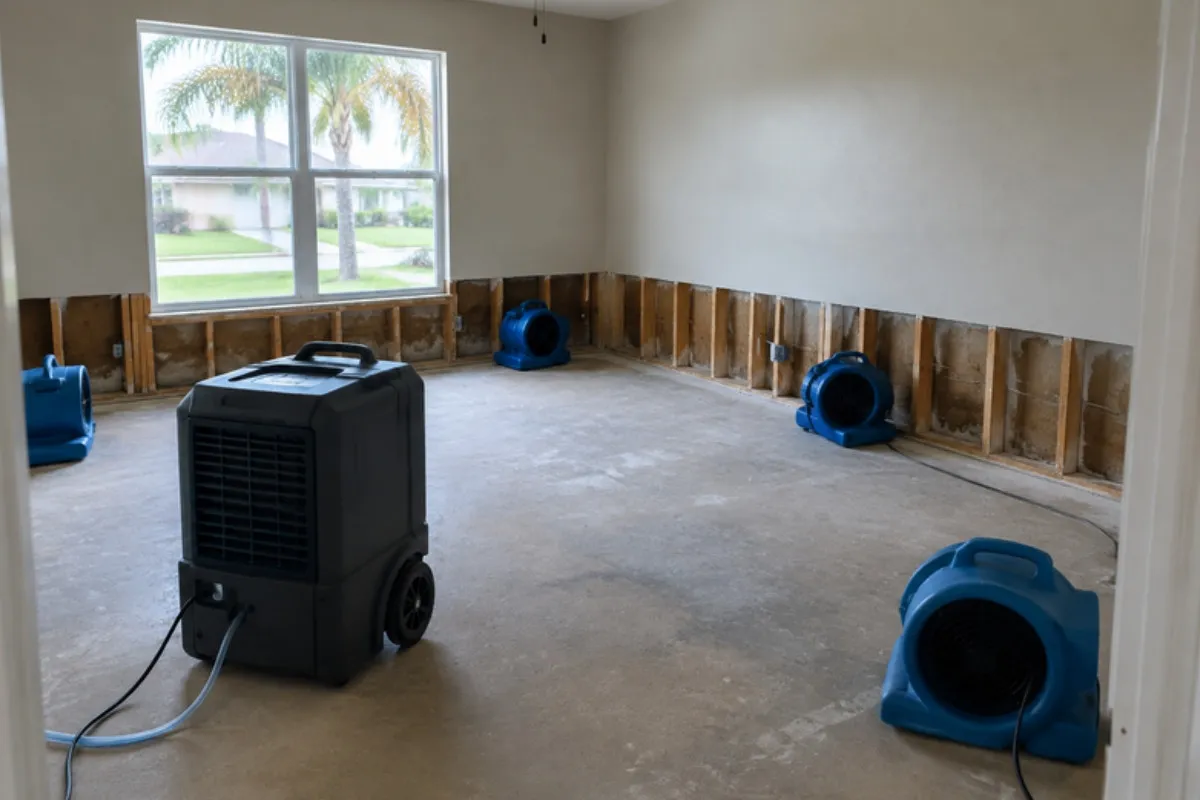
Post-flood mold removal in Danbury takes out soaked drywall, insulation and flooring, cleans and dries the framing, and finishes with a clearance check before rebuilding. In Texas, a mold assessment consultant writes the protocol and a separate company that holds a TDLR mold remediation contractor license does the removal. Call the number on this page to be connected with a local mold remediation company in Danbury.
We live near Flores Bayou. What should we do first after water gets in?
Danbury is a small rural Brazoria County city of about 1,700 people along County Road 171 and the Union Pacific line, about 39 miles from Houston, with Flores Bayou right next to town. When a heavy Gulf storm stalls over flat coastal ground, water can collect around and under homes. The first steps are the same whatever the source: shut off power to wet rooms if needed, stop any leak, and start drying. Photograph the waterline and damage before anything goes to the curb. EPA advises keeping children out of the cleanup and wearing at least an N-95 respirator around wet, moldy material.
How do we know what has to be torn out?
A mold assessment consultant inspects, measures moisture and writes a protocol listing the rooms, the materials and amounts to remove or clean, the methods and the clearance criteria. EPA notes porous materials such as carpet, ceiling tiles and moldy drywall may need to be thrown away, while studs, tile and concrete can usually be cleaned. Texas law keeps the consultant and the remediation company separate on the same project, so the company removing the material isn't the one deciding how much goes. If the job covers 25 contiguous square feet or more, the remediator notifies TDLR five days before starting.
Does Danbury need a permit for the rebuild?
Yes, in most cases. The City of Danbury requires a permit for altering, repairing, improving or removing within city jurisdiction, and inspections are done by a third-party SafeBuilt inspector, scheduled through City Hall at 6102 5th Street (979-922-1551 x 4). New construction also needs a Letter of No Objection from Danbury Drainage District No. 8 before city permits are issued, so ask early if the damage means rebuilding from the ground up. The mold removal itself falls under TDLR rules rather than a city permit.
A local note
The Brazoria County Health Department's page does not mention mold or housing complaints, but the county's disaster resource page links flood-cleanup guidance. When the job is done and clearance has passed, keep the Certificate of Mold Damage Remediation with your house records.
Post-Flood Mold Removal questions in Danbury
Does the house have to be dry before the mold work starts?
Who should stay out of the house during flood cleanup?
Do I need a permit to rebuild after flood mold removal in Danbury?
What paperwork should I get when the flood mold job is finished?
More mold services in Danbury
Post-Flood Mold Removal nearby
Sources
- EPA: Homeowner's and Renter's Guide to Mold Cleanup After Disasters (pdf)
- EPA: Mold Cleanup in Your Home
- Tex. Occ. Code 1958.151: Scope of Work Analysis
- TDLR: Mold Assessors and Remediators FAQs
- TDLR: Texas Mold Remediation Notification Requirements
- 16 Tex. Admin. Code 78.150: Photographs; Certificate of Mold Damage Remediation; Duty of Property Owner
- Wikipedia: Danbury, Texas
- City of Danbury: Permits
- Brazoria County Health Department
- Brazoria County Environmental Health: Disaster resource information
Last updated: