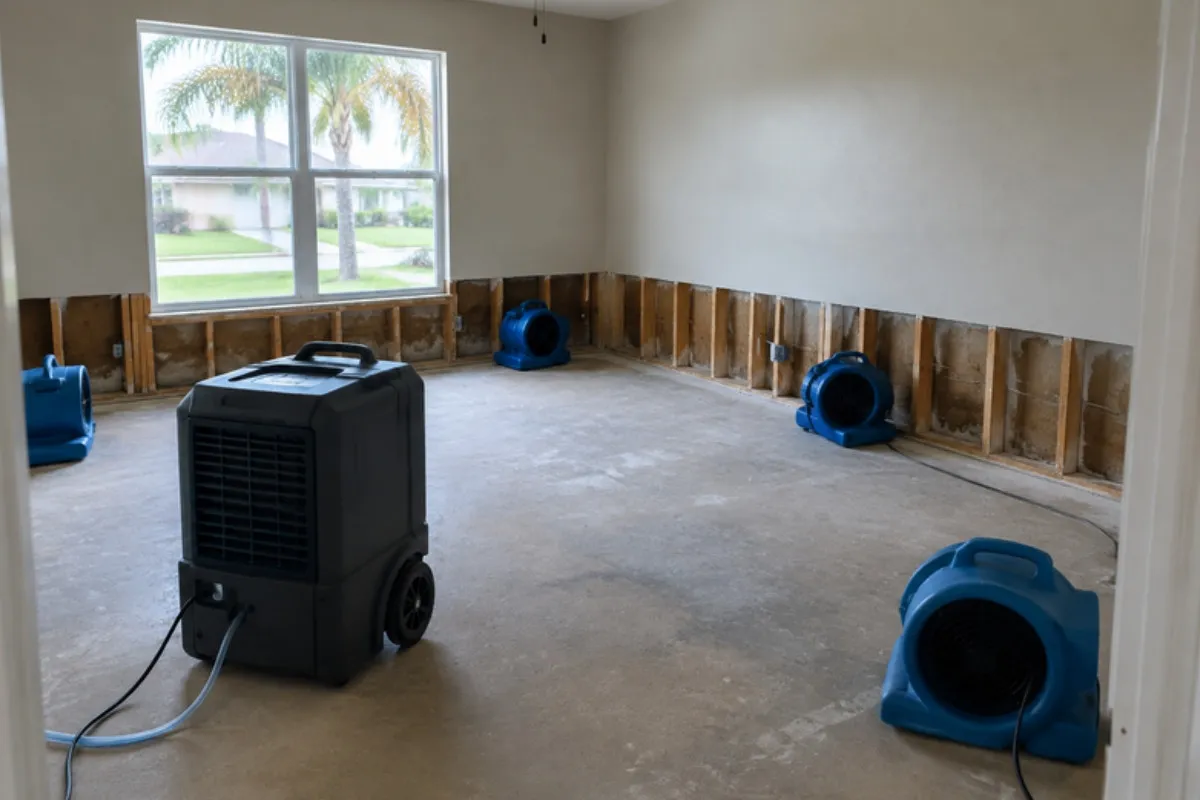
Post-flood mold removal in Liverpool begins after the water is stopped and the house is drying: a mold assessment consultant writes the protocol, and a separate company removes soaked porous materials, cleans the framing and prepares the area for a clearance check. Texas requires those two roles to be different companies. Call the number on this page to be connected with a local mold remediation company in Liverpool.
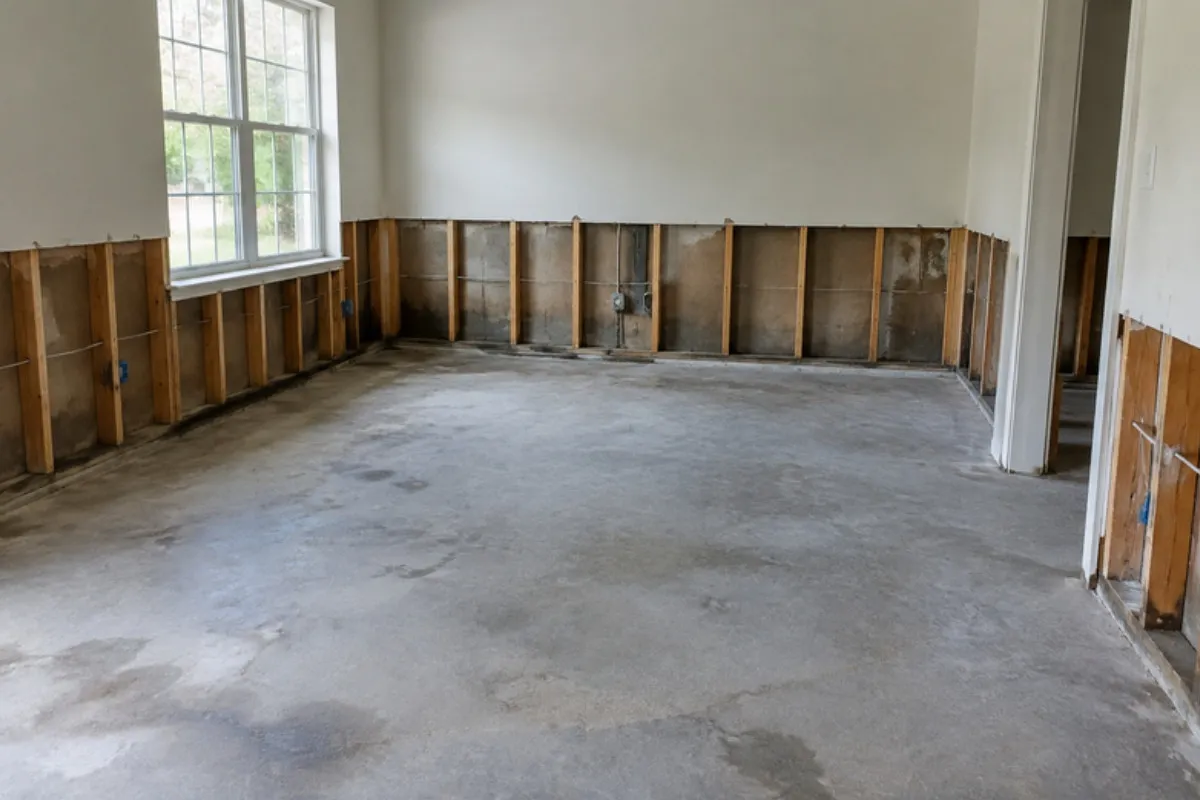
Signs to watch for after water gets in
- A heavy, damp smell in rooms that took water, worst on hot afternoons
- Spots or staining creeping up drywall from the floor
- Swollen trim, door jambs and lower cabinet panels
- Sagging or springy floors in raised homes
- Mildew on stored items, shoes and furniture backs
- Specks around vents when the AC comes back on
Water around Liverpool
Liverpool is a very small, mostly rural city of about 475 people in northeastern Brazoria County, about 35 miles from Houston, laid out along County Road 171 and the Union Pacific line with city limits running up Main Street to SH 35. Chocolate Bayou forms its eastern border. Rural lots on flat coastal ground can hold water for days after a tropical downpour, and Gulf storms can damage roofs as well. A soaked home that sits closed up in summer humidity is where mold takes hold, so ventilation and drying matter as much as the tear-out. Houston-area homes are generally either slab-on-grade or older pier-and-beam, and each fails differently after a flood: raised floors trap damp air underneath, while slab homes wick water up into the bottom of the walls.
What affects cost
Angi's Houston cost data lists typical mold removal at $863 to $3,329. National ranges (HomeGuide, 2026) put 10 to 100 square feet at $500 to $1,500 and 100 to 300 square feet at $1,500 to $6,000. In a rural area, travel and debris hauling can add to the bill, alongside the wet square footage, cabinets and flooring removed, AC involvement and the separate assessment consultant fee.
What happens when you call
Describe the water and the damage and you'll be connected with independent local companies. A consultant who holds a TDLR license writes the protocol at least a day before removal; the remediation company follows it with its own work plan; the consultant performs the post-remediation assessment; and you get a Certificate of Mold Damage Remediation. For rebuilding, Liverpool City Hall at 8901 Calhoun St. (CR 171), (281) 581-2342, handles building permits, plus driveway and dirt permits; no fill dirt goes in without one, which matters if you plan to regrade around the house.
Post-Flood Mold Removal questions in Liverpool
Can I pull out soaked drywall and carpet myself in Liverpool?
How far up do flooded walls usually get cut?
Will the county health department look at flood mold in my Liverpool home?
How do I check the companies before flood mold work starts?
More mold services in Liverpool
Post-Flood Mold Removal nearby
Sources
- EPA: Homeowner's and Renter's Guide to Mold Cleanup After Disasters (pdf)
- EPA: Mold Cleanup in Your Home
- TDLR: Mold Assessors and Remediators FAQs
- TDLR: License Search
- TDLR: Consumer Mold Information Sheet (pdf)
- 16 Tex. Admin. Code 78.150: Photographs; Certificate of Mold Damage Remediation; Duty of Property Owner
- Angi: How much do mold removal services typically cost? (Houston, TX)
- HomeGuide: How Much Does Mold Removal and Remediation Cost? (2026)
- Wikipedia: Liverpool, Texas
- City of Liverpool: Building permits
- Brazoria County Health Department
- Brazoria County Environmental Health: Disaster resource information
Last updated: