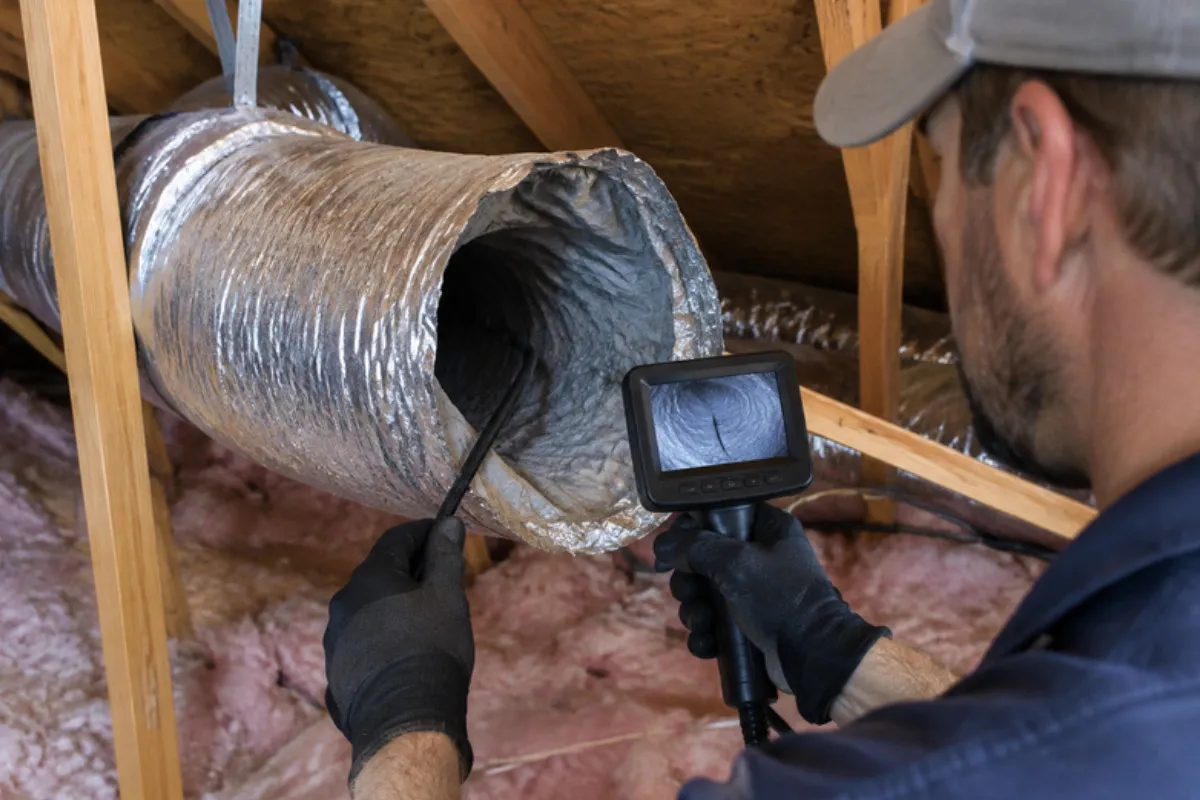
In Spring, AC mold forms where the system stays wet: the coil and drain pan, ducts that sweat in the attic, chilled registers, and any ductwork that took water in the Cypress Creek floods. Removing it means finding which of those sources is at work and having a separate remediation company clean or replace the affected parts under a mold assessor's protocol. Call the number on this page to be connected with a local mold remediation company in Spring.
Local conditions in Spring
Spring is an unincorporated community in north Harris County, about 19 miles from downtown Houston, that grew after the 1970s as subdivisions spread north. Its historic core, Old Town Spring, is a restored shopping and dining district. Much of the area drains to Cypress Creek, and many affected homes were built in low-lying areas along it. In the April 2016 Tax Day flood about 1,700 homes along Cypress Creek flooded, and some flooded again a month later. During Harvey more than 8,700 homes along the creek took on water, with Inverness Forest, Northwood Pines, Ponderosa Forest and Champion Forest among the neighborhoods hit.
Homes away from the creek face the everyday version of the problem: attic air handlers, long flex duct runs and a cooling season that hardly ends.
Which kind of moisture problem is it?
| Source | Typical clue | Usual fix |
|---|---|---|
| Sweating ducts or boots | Spots around ceiling registers; damp insulation in the attic | Seal and insulate; replace moldy flex duct |
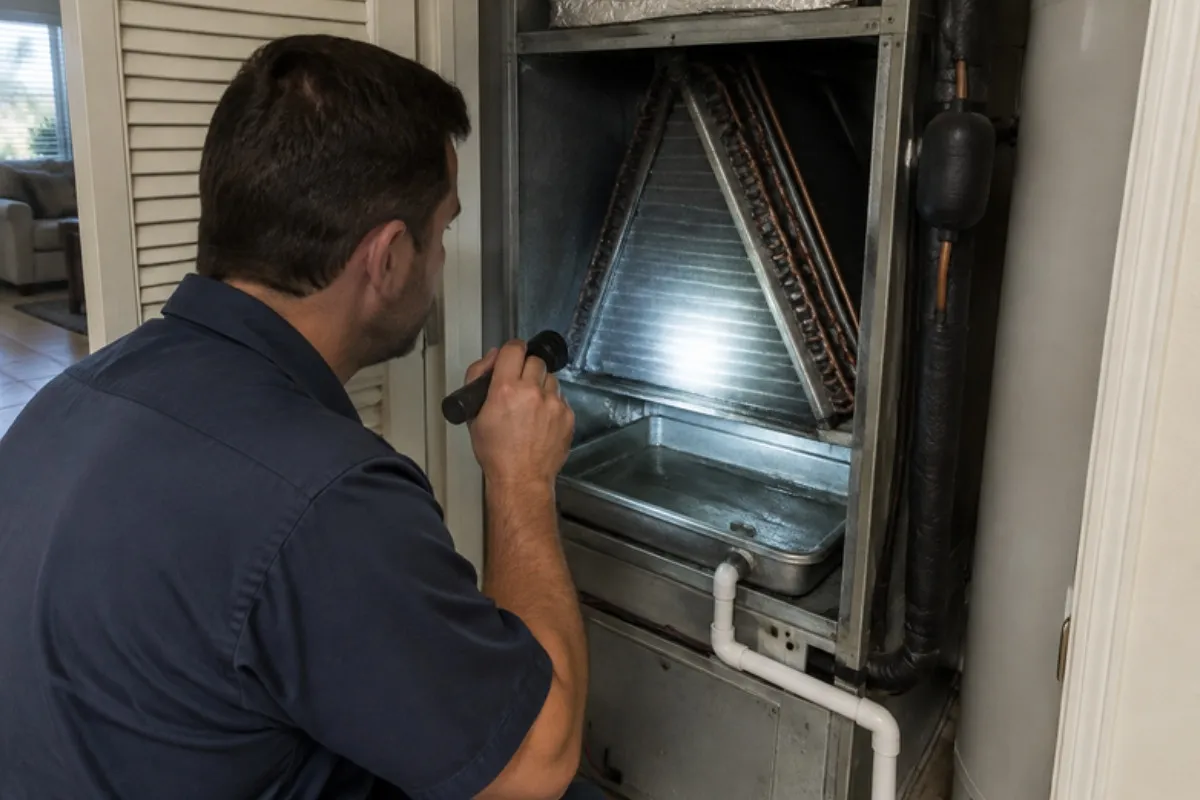
| Drain pan or condensate line | Water under the unit; float switch trips | Clear or replace the line and pan; clean the coil area |
| High indoor humidity | Clammy rooms, mildew on vents in several rooms | System sizing or settings reviewed by an HVAC contractor |
| Floodwater | Odor since a flood; floor registers or low returns affected | Flooded ducts and insulation usually removed under the protocol |
The mold assessment consultant sorts this out and writes the protocol; Texas bars the same company from also doing the removal.
Signs worth a call
- A heavy, earthy smell from the vents on humid days
- Gray growth on register louvers that returns within weeks of cleaning
- Ceiling stains below the attic unit
- Rust in the pan or around the coil cabinet
Timing
Summer is when systems run longest and problems surface, but the best time for an inspection is before the peak. After a creek flood, dry the house first; EPA says materials that stay wet past 24 to 48 hours should be assumed moldy. Rebuilding a ceiling in unincorporated Spring needs a permit from the Harris County Office of the County Engineer.
AC & Air Duct Mold Removal questions in Spring
Could an old flood have left mold in my ductwork?
Will duct cleaning alone get rid of mold in the AC system?
Why do spots keep coming back on the ceiling around my vents?
How do I check the mold companies before I hire them?
More mold services in Spring
AC & Air Duct Mold Removal nearby
Helpful guides
Sources
- EPA: Mold Cleanup in Your Home
- EPA: Should You Have the Air Ducts in Your Home Cleaned?
- EPA: Homeowner's and Renter's Guide to Mold Cleanup After Disasters (pdf)
- TDLR: Mold Assessors and Remediators FAQs
- TDLR: Consumer Mold Information Sheet (pdf)
- TDLR: License Search
- Harris County Office of the County Engineer: Permits FAQ
- Harris County Flood Control District: Spring Floods 2016
- Community Impact: Spring, Klein recover from flood damage along creeks
- Community Impact: Flooding to remain reality for many Spring, Klein homes along Cypress Creek
- Wikipedia: Spring, Texas
Last updated: