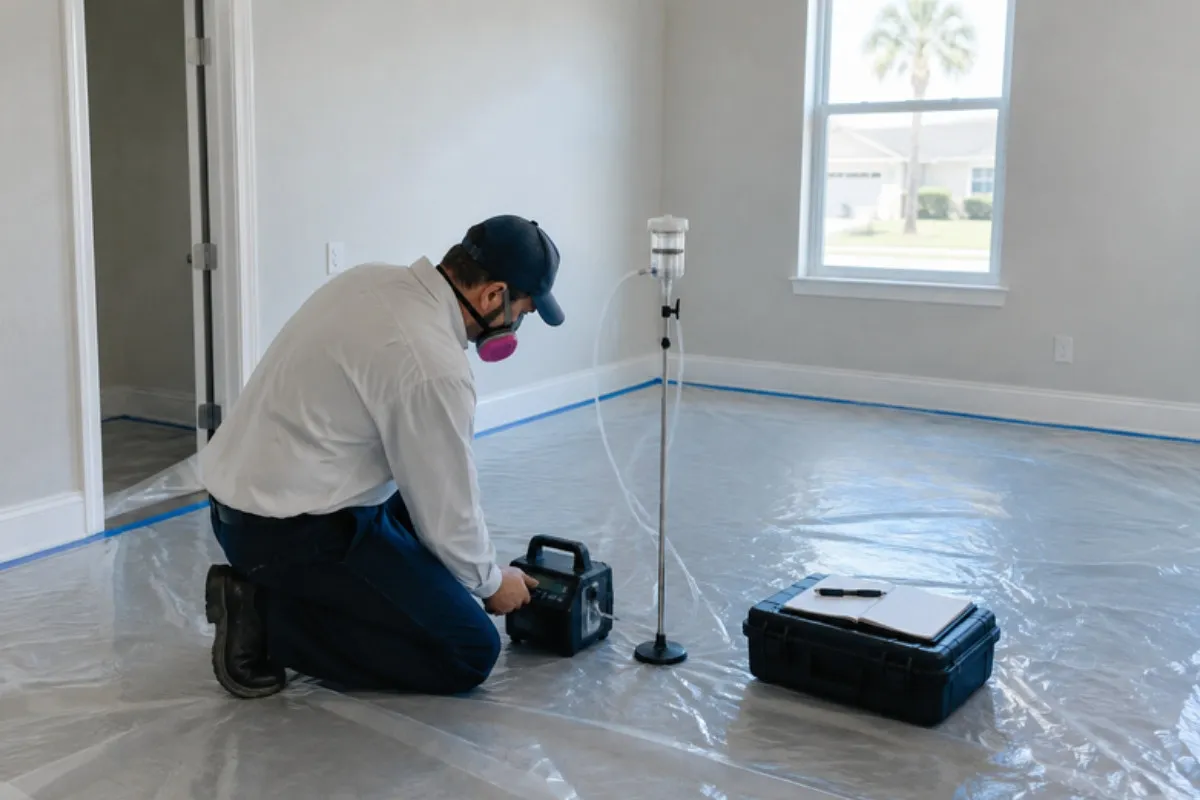
In Spring, post-remediation clearance is the return visit by the mold assessment consultant who wrote your protocol, checking the work area against criteria that were set before removal began. A passed report is the green light for rebuilding. Call the number on this page to be connected with a local mold inspector in Spring.

Why Spring homes get a hard look
Spring is an unincorporated community of about 62,600 people in north Harris County, around 19 miles from downtown Houston, with Old Town Spring at its historic core. Subdivisions spread here after the 1970s, and many were built in low-lying areas along Cypress Creek. The April 2016 Tax Day flood put about 1,700 homes along the creek under water, and some north Harris County homes flooded again that May. During Hurricane Harvey in 2017, more than 8,700 homes along Cypress Creek took on water; Ponderosa Forest, Westador, Champion Forest and Wimbledon Champions were among the hardest-hit Spring-Klein neighborhoods. Homes that flood more than once are the ones where hidden moisture is most likely to survive a cleanup.
What each clearance criterion tells you
| Criterion | What it shows | What it can't show |
|---|---|---|
| Visual inspection | No visible mold or wood rot remains | Moisture deep in framing |
| Moisture readings | Whether wood and drywall edges are dry enough | Whether surfaces were cleaned |
| Surface samples | Whether a cleaned spot still carries growth | Conditions in the rest of the room |
| Air samples | How indoor air in the work area compares with outside or other rooms | A federal safe level, since none exists |
The consultant decides which of these go into the protocol before work starts, and the area has to meet each one. Ask for the criteria in plain terms when you receive the protocol. If the plan relies only on air samples, ask how the consultant will confirm that framing along the floor line has dried, since creek water tends to leave the lowest few feet of a wall wet the longest.
Warning signs before the return visit
- Bottom plates and lower studs still cool and damp to the touch.
- Silt or creek debris left in wall cavities or under cabinets.
- Odor near the floor in rooms that were never opened up.
- The remediation crew wants to remove containment before the consultant arrives.
Timing
Because only the consultant who wrote the protocol can declare clearance, hire that person before the remediation company begins. After a big rain, many homes along the creek can need the same companies at once, so book early. Rebuilding permits for unincorporated Spring come from the Harris County Office of the County Engineer; the county requires no demolition permit, but rebuilding afterward needs one.
Post-Remediation Clearance Testing questions in Spring
Where do I find the clearance criteria for my job?
The mold job is finished but I never received a CMDR. What now?
What happens if the work area fails clearance?
Should the AC system be part of clearance?
More mold services in Spring
Post-Remediation Clearance Testing nearby
Sources
- Wikipedia: Spring, Texas
- Harris County Flood Control District: Spring 2016 floods
- Community Impact: Flooding to remain a reality for many Spring-Klein homes along Cypress Creek
- Community Impact: Spring, Klein recover from flood damage along creeks
- Harris County Office of the County Engineer: Permits FAQ
- TDLR: Mold Assessors and Remediators FAQs
- EPA: Mold Information Slideshow (testing and sampling)
- Tex. Occ. Code 1958.151: Scope of Work Analysis
- 16 Tex. Admin. Code 78.150: Certificate of Mold Damage Remediation
- TDLR: Consumer Mold Information Sheet (pdf)
- EPA: Mold Cleanup in Your Home
Last updated: