Highlands sits on the higher east bank of the San Jacinto River in unincorporated east Harris County, but homes close to the river have still flooded when it rose. Mold here follows river water, heavy rain and AC moisture. Call the number on this page to be connected with a local mold remediation company in Highlands.
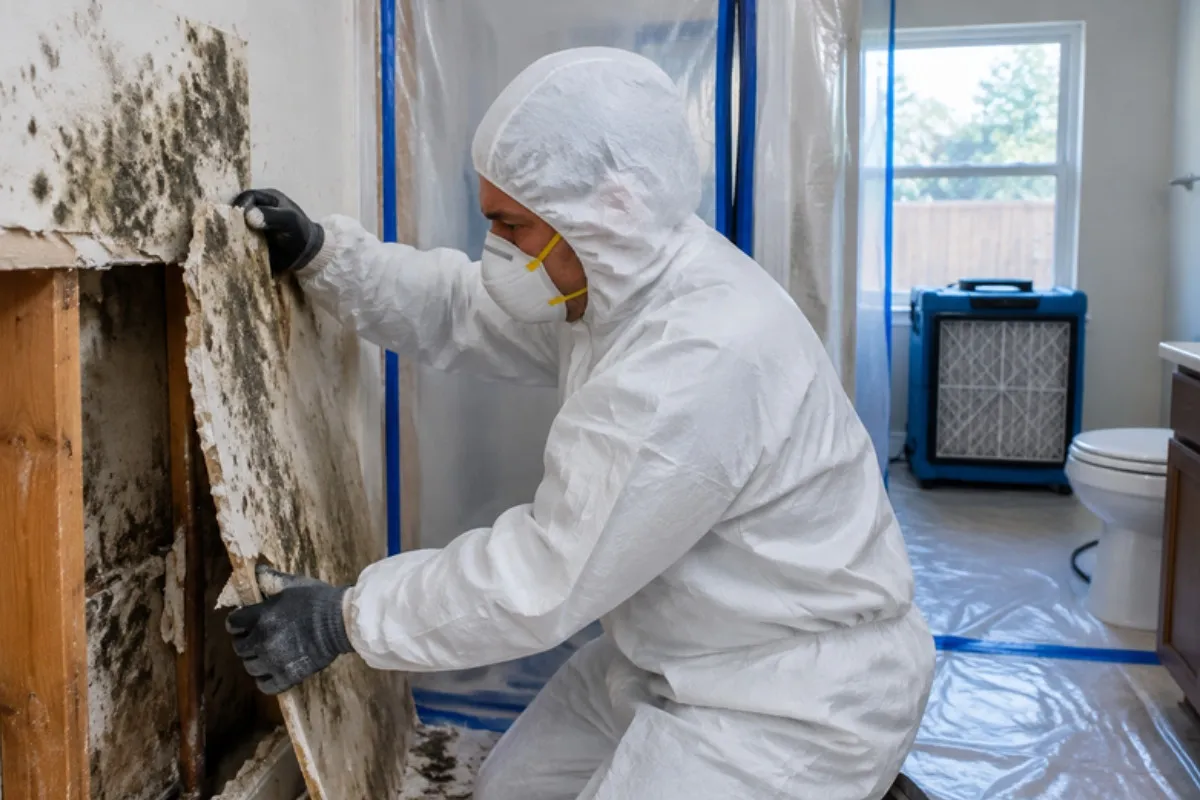
Mold services in Highlands
When the San Jacinto rises
In an October 2015 storm, an EF-0 tornado closed FM 2100 and the San Jacinto River climbed about six feet above normal, flooding some homes near the river. That is the kind of event that leads to mold weeks later: water that soaked wall cavities, carpet and lower cabinets and was never fully dried. EPA's flood guidance is direct. If a home flooded and couldn't be dried within 24 to 48 hours, assume mold is growing, wear at least an N-95 respirator during cleanup, and keep children out of it.
A little about Highlands
Highlands began as an early-1900s railway stop and grew during World War II, housing military members and war-plant workers. Today the census-designated place has about 8,600 people (2020 Census), about 24 miles in a straight line east of central Houston, in an industrial stretch of the county near the Ship Channel, Interstate 10 and the Lynchburg Ferry. Main Street, East Wallisville Road, Highlands Park and Stratford Park anchor the community.
Outside of flood events, everyday moisture does most of the damage. Attic air handlers drip, ducts sweat, bathrooms stay humid, and heavy tropical rain tests every roof and window. Slow-draining clay soils keep water around foundations after long storms.
Permits after the cleanup
Highlands is unincorporated, so building and floodplain permits come from the Harris County Office of the County Engineer (Residential Group 713-274-3920; Inspections 713-274-3924). Development without a permit is prohibited under the county's floodplain rules, drawings for work in the 100-year floodplain need a Texas architect's or engineer's seal, and 500-year floodplain projects need an elevation certificate. Mold removal itself isn't a permitted trade, but rebuilding walls and floors afterward can be.
Renters and health
Notify your landlord in writing. Texas Property Code 92.052 requires a diligent effort to repair a condition that materially affects health or safety once notice is given and rent is current (general information, not legal advice). Harris County Public Health's Neighborhood Nuisance program handles dilapidated, unsanitary or structurally unsafe buildings and standing water through Harris County 311 or 713-274-6300; its page does not mention mold. Harris County Public Health is also the place for health questions.
Texas licensing and your call
TDLR licenses mold assessors and remediators, and they must be different companies on the same project. The assessor writes a protocol, the remediator follows it, and the assessor confirms clearance before you receive a Certificate of Mold Damage Remediation. When you call, you'll be connected with an independent local company that serves Highlands.
Common questions in Highlands
My Highlands home took river water. What should I throw out?
Is a permit needed to rebuild after flood mold?
Should children help with flood cleanup?
Does a CMDR guarantee my insurance will pay?
Nearby cities and towns
Sources
- Wikipedia: Highlands, Texas
- Star-Courier: Tornado hits Highlands, flooding in Crosby
- Harris County Engineering: Permits FAQ
- Harris County Public Health: Neighborhood Nuisance
- EPA: Homeowner's and Renter's Guide to Mold Cleanup After Disasters (pdf)
- EPA: Mold Cleanup in Your Home
- Tex. Prop. Code 92.052: Landlord's Duty to Repair or Remedy
- TDLR: Mold Assessors and Remediators FAQs
- 16 Tex. Admin. Code 78.150: Photographs; Certificate of Mold Damage Remediation; Duty of Property Owner
Last updated: