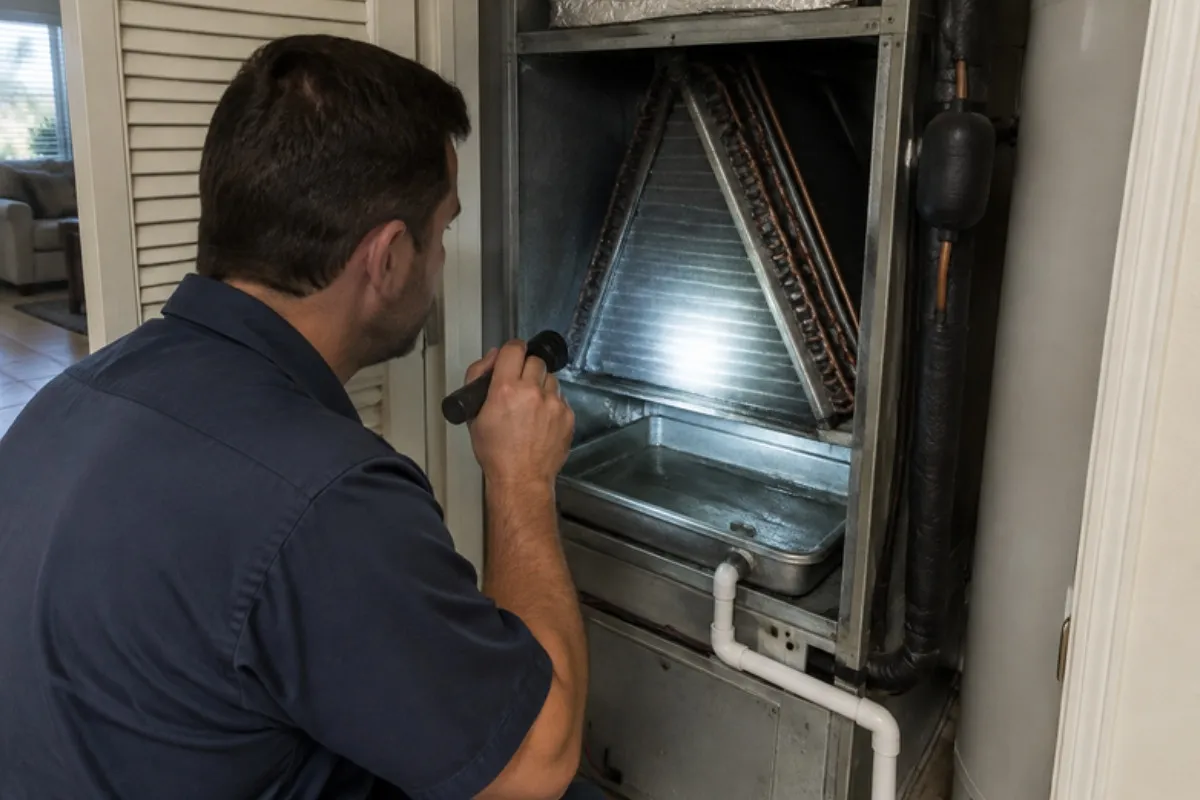
Highlands AC mold forms where the system collects water it cannot shed: the coil, the drain pan, sweating ducts and chilled supply grilles, plus any parts that took river water. Small surface spots can sometimes be handled by the homeowner, but growth in the coil, blower or duct runs calls for a mold assessor's protocol and a separate remediation company. Call the number on this page to be connected with a local mold remediation company in Highlands.
Local conditions in Highlands
Highlands is an unincorporated community in industrialized east Harris County, about 24 miles from downtown Houston, on the higher east bank of the San Jacinto River. It began as an early-1900s railway stop and grew during World War II, housing military members and war-plant workers, so some homes here are older than in the newer suburbs. Being near the river and the Houston Ship Channel means humid air most of the year, and that makes the cooling system's cold parts collect water constantly.
River flooding is the other factor. In an October 2015 storm, an EF-0 tornado closed FM 2100 and the San Jacinto River rose about six feet above normal, flooding some homes near the river. In any home where floodwater reached floor registers, a low return or the air handler, those parts belong on the inspection list even years later.
Homeowner or professional?
| Situation | Homeowner can usually handle | Better left to professionals |
|---|---|---|
| Light spotting on one removable grille | Remove, wash, dry and reinstall | Only if it keeps returning |
| Clogged condensate line | Flush per the equipment maker's guidance | Repeat clogs or a rusted pan, which call for an HVAC contractor |
| Growth on the coil or blower | No | Assessment, then remediation |
| Mold inside flex duct | No | Usually replaced under a protocol |
| Ducts or equipment that took floodwater | No | Assessment, then remediation |
EPA says homeowners can usually handle areas under about 10 square feet, but the inside of an AC system is not a place to improvise; household sprays and foggers do not fix the moisture.
Signs to look for
- A smell like wet cardboard when the blower starts
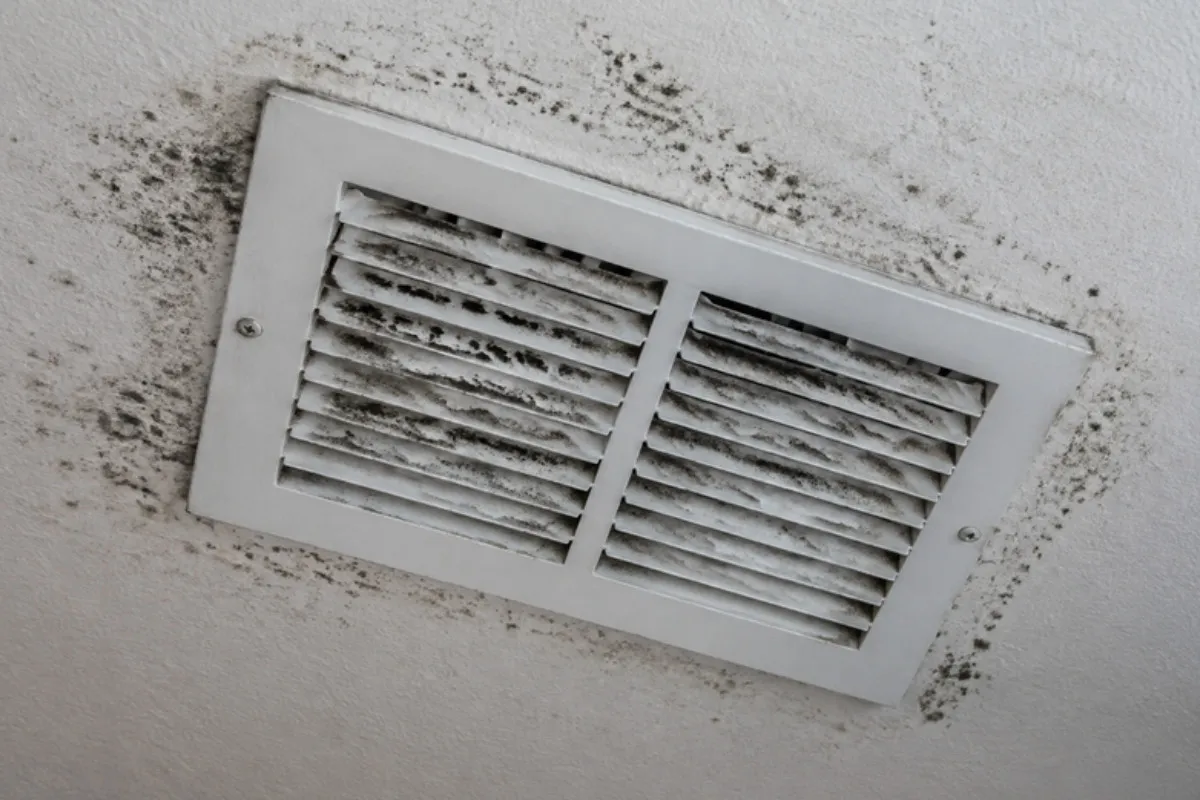
- Dark rings on the ceiling around supply registers
- Water in the pan or a soaked closet floor
- Duct insulation in the attic that is wet or sagging
Seasonal timing
The worst stretch runs from late spring into early fall, when the unit barely cycles off. Schedule an inspection before peak heat if you can, because EPA advises against running a system you suspect is contaminated. After a river rise, get the house drying first; mold work on a structure that is still wet does not hold. Rebuilding a ceiling afterward falls under the Harris County Office of the County Engineer, which requires a permit for development in unincorporated areas.
AC & Air Duct Mold Removal questions in Highlands
Could an old flood have left mold in my ductwork?
Can I wipe mold off a supply register myself?
Will the county health department look at mold in my AC?
How do I check the mold companies before I hire them?
More mold services in Highlands
AC & Air Duct Mold Removal nearby
Helpful guides
Sources
- EPA: Mold Cleanup in Your Home
- EPA: A Brief Guide to Mold, Moisture and Your Home
- TDLR: Mold Assessors and Remediators FAQs
- TDLR: License Search
- Harris County Office of the County Engineer: Permits FAQ
- Harris County Public Health: Neighborhood Nuisance
- Star-Courier: Tornado hits Highlands, flooding in Crosby
- Wikipedia: Highlands, Texas
Last updated: