Post-remediation clearance in Crosby is the written pass or fail from the mold assessment consultant who planned the job, based on the clearance criteria in that consultant's protocol. A pass opens the door to rebuilding and to your Certificate of Mold Damage Remediation. Call the number on this page to be connected with a local mold inspector in Crosby.
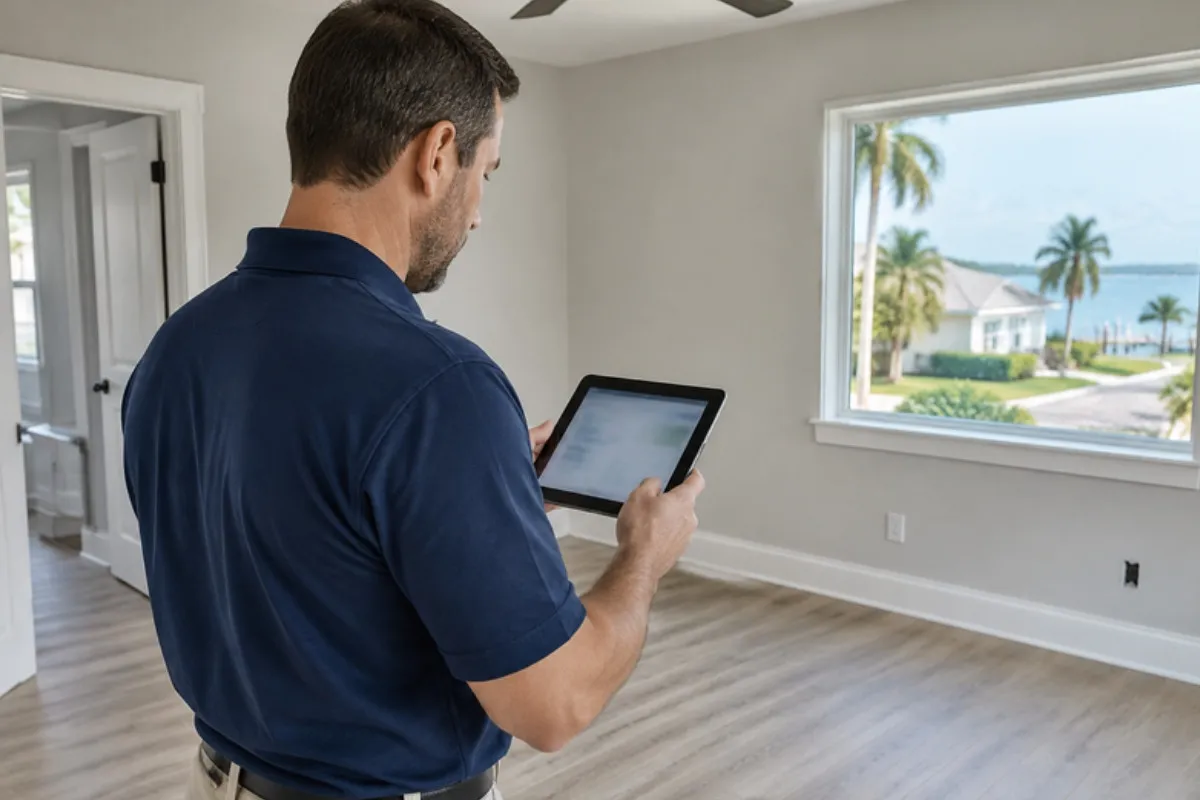
Who is allowed to tell me the job passed?
Only one person: the mold assessment consultant who prepared the protocol before remediation started. Texas law does not let the same company assess and remediate on one project, and TDLR rules say a consultant who did not write the protocol cannot declare clearance afterward. So the remediation contractor's opinion, however confident, is not a clearance. If a Crosby crew tells you the job is done and offers to close up walls, ask to see the consultant's passed clearance report first. You can confirm both companies on TDLR's license search.
What exactly gets checked?
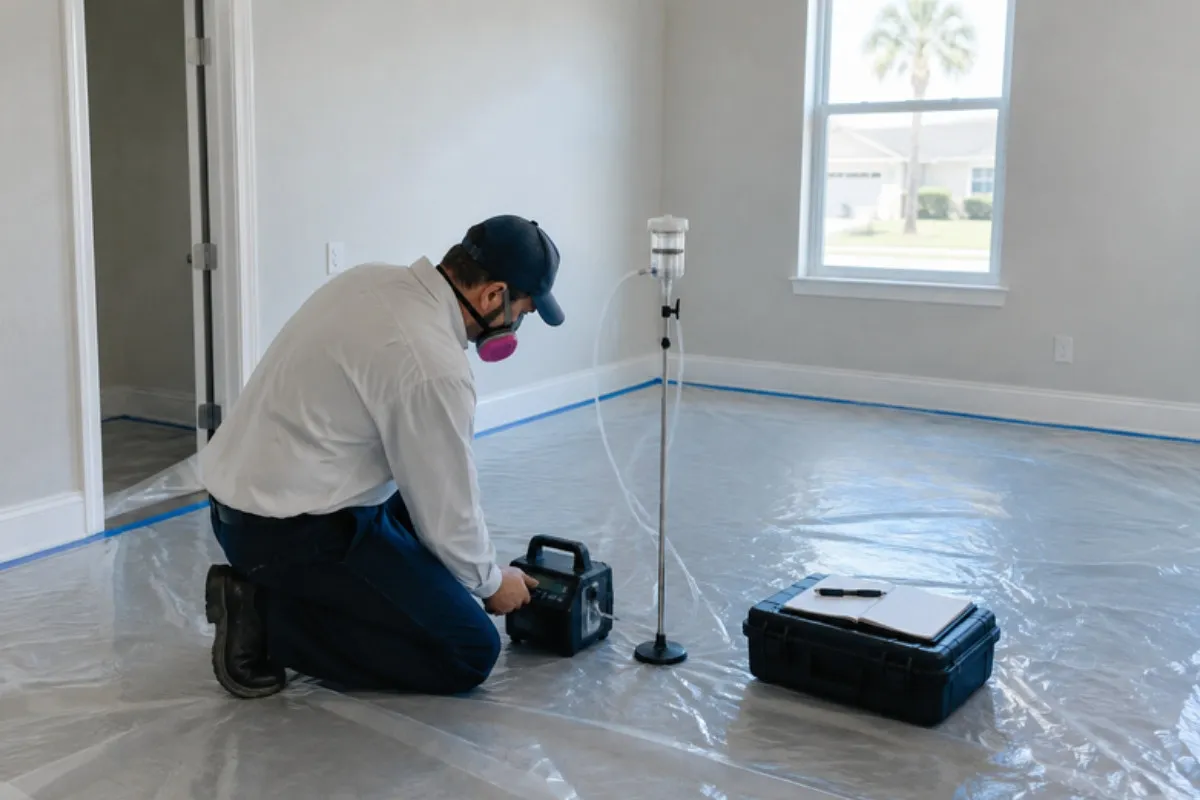
The consultant returns to the work area and confirms three things: no visible mold or wood rot remains, the work followed the protocol, and the clearance criteria written into that protocol were met. Those criteria are set before work begins and can combine a visual standard, moisture readings and lab samples. There are no EPA or federal limits for mold spores, so a pass is measured against your own protocol rather than a national number. If the area fails, the contractor does more work and the consultant comes back.
Why does moisture matter so much here?
Crosby is a small unincorporated community of about 3,400 people in east Harris County, roughly 25 miles from downtown Houston. It started as an 1820s settlement and grew as a railroad shipping point. In an October 2015 storm, the Harris County Flood Control District measured about 13 inches of rain, and businesses at a Crosby shopping center had more than four inches of water on their floors. Heavy rain like that, on flat ground with slow-draining clay, is how water ends up under flooring and inside walls. A remediated cavity that is still wet at the return visit will not pass and can grow mold again once it is closed, so dry-out is part of getting to clearance.
One local note
Crosby is unincorporated, so the Harris County Office of the County Engineer issues permits for rebuilding after a passed clearance. Projects in the 100-year floodplain need drawings sealed by a Texas architect or engineer, and the 500-year floodplain calls for an elevation certificate. Keep your clearance report, photos and CMDR together with those permit records.
Post-Remediation Clearance Testing questions in Crosby
What happens if the work area fails clearance?
Is there a spore count that means the house passed?
The mold job is finished but I never received a CMDR. What now?
If the job passes, can mold still come back?
More mold services in Crosby
Post-Remediation Clearance Testing nearby
Sources
- Wikipedia: Crosby, Texas
- Star-Courier: Tornado hits Highlands, flooding in Crosby
- Harris County Office of the County Engineer: Permits FAQ
- TDLR: Mold Assessors and Remediators FAQs
- TDLR: License Search
- EPA: Mold Information Slideshow (testing and sampling)
- TDLR: Consumer Mold Information Sheet (pdf)
- 16 Tex. Admin. Code 78.150: Certificate of Mold Damage Remediation
- EPA: A Brief Guide to Mold, Moisture and Your Home
Last updated: